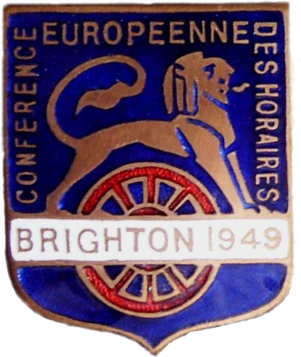
was closed in 1949, by British Railways. But remained open as a depot for steam locomotives
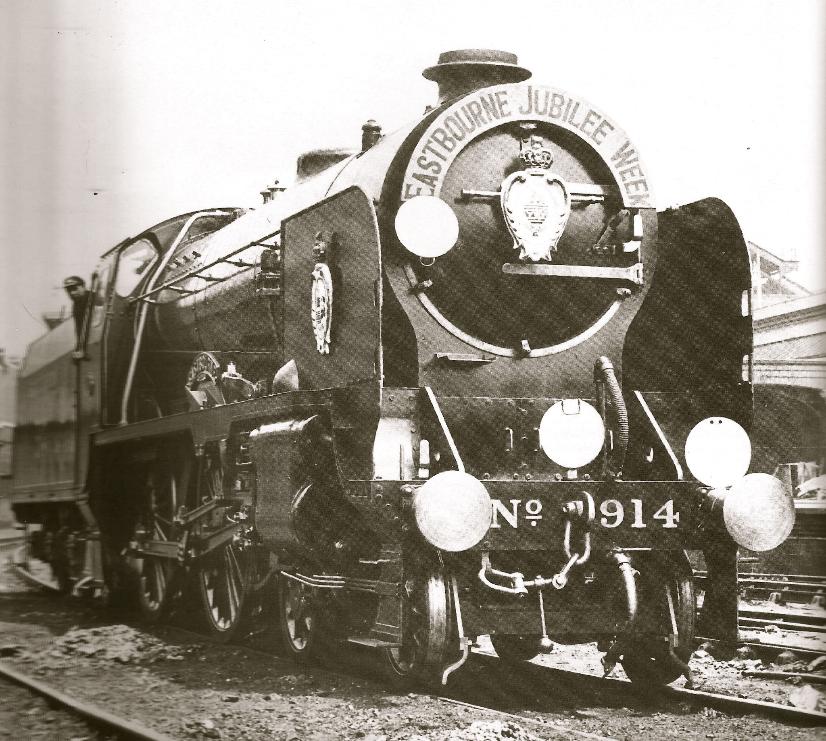
The British Railways, Newhaven - Dieppe Boat Train leaving Victoria on Sunday 15th May 1949
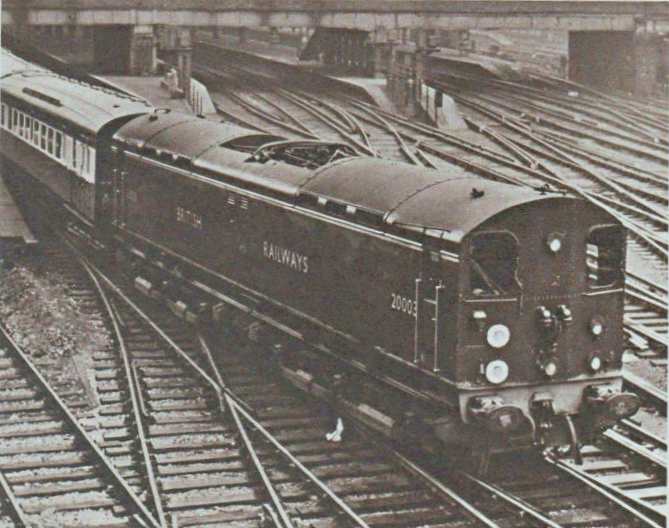
An electric locomotive hauls the boat train for the first time
Carolyn Proud Collection
On the morning of Sunday 15th May, 1949 the coaches of the Newhaven - Dieppe Boat train were hauled from Victoria not by a steam locomotive, but a new electric locomotive (CC3) of the latest type. This locomotive said to be able capable of hauling trains at a speed of up to 75 m.p.h
Railway accidents on British Railways
Southern Region
Central Division
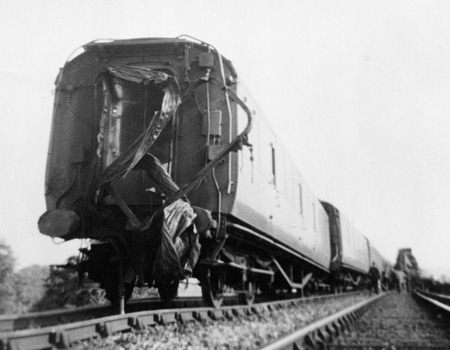
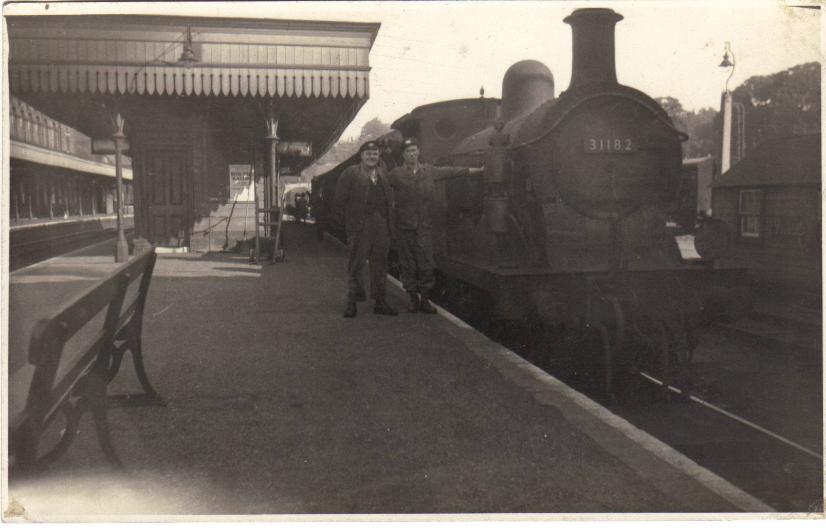
DI DOWSETT COLLECTION
T.W.W. Fireman Fred Diplock and his unknown driver,
Loco No. 31182 at T.W.W. 19.9.1949.
LOCOMOTIVE JOURNAL
AUGUST 1949
EDITOR'S NOTES
WHERE WE STAND
Matters affecting railway staff conditions have of late received a share of public attention. Much of the comment which has been forthcoming, in the Press and elsewhere, has been uninformed and wide of the mark. It is as well therefore that the logical and consistent attitude of the A.S.L.E.&F. in relation to certain of these current topics should be here set out.
So far as pensions are concerned, they remain with us what they were declared to be by our 1948 A.A.D., a matter of urgent priority. This is of course not to say that we consider the present remuneration of locomen, either in terms of real wages or at face value on paper, as satisfactory, having regard to the high degrees of skill, responsibility and personal incon-venience which are inherent in our calling.
The position in regard to these matters was made abundantly clear by our 1949 Annual Assembly held two months ago at Margate. First, the delegates again expressed in public session the insistence our members on the urgency of the pensions issue. Later, arising from consideration' of agenda items relating to wages, they directed that, whilst bearing in mind the prime necessity for pensions, no suitable opportunity for putting forward proposals for improved rates of pay should be missed. It is our firm conviction that in so doing they gave formal expression to the desires of the loco. fraternity as a whole.
It will be recalled that the 1947 Court of Inquiry recommended a comprehensive examination of grading in the railway service, with a view to rearranging inter-grade margins "so that adequate incentive is given for the acceptance of higher. responsibility."
The outcome of that recommendation was the agreement of February, I948, on differentials. This agreement was arrived at after intensive and difficult negotiations, and then only with the accompaniment of a recorded protest by the unions " against the requirement that the revised rates of pay offered must be regarded as disposing of the recommendations, of the Court of Inquiry." Those rates in themselves, then, were obviously not such as this Society aimed to achieve. Nevertheless, the principle of "relativity" on which they were based (and of which the current N.U.R. claim takes no account) was a correct and laudable one-and one which, to this Society, is a fundamental of sound negotiation in the matter of railway wages rates.
Plainly, therefore, the A.S.L.E.&F. cannot approve on behalf of the footplate grades of any attempt to relate the wages of those grades to a fodder basis. We do not and cannot coun-tenance a worsening of the relative margins already established. To do so would be to put back the clock beyond February, 1948, and to betray the interests of our craft and the principles for which we stand.
Having regard to the present exceptional circumstances we have accepted the invitation of the Minister of Labour to be, represented at the Conciliation Board he has appointed to consider the present position, and at which discussions policy will be further pursued with the utmost vigour.
As to pensions, we are not prepared to allow this particularly important subject to become a matter for arbitration through the medium of this Board, preferring to deal with it elsewhere, and in our own way.
LOCOMOTIVE JOURNAL
AUGUST 1949
LONDON BRIDGE BRANCH
Branch meetings were held on July 4 and 11. the attendance at both meetings was not as good as usual. Pensions and the housing question for transferred member were some of the items discussed. Two new members have recently been enrolled.
Bro. J. Burridge, branch collector for many years, retires shortly, and we extend all good wishes to Jesse in his retirement, and also to Bro. A. Fry, a loyal member, who has just retired.
On July 3 members and their families journey to Southsea by coach via Haslemere and Petersfield, the lovely scenery being much enjoyed. We all regretted the absence through his accident last January of Bro. J. Parsons.To Bro. H. Rick, Social Fund Secretary, and members of the Committee such an enjoyable outing.
W. ALDERMANBRANCH SECRETARY
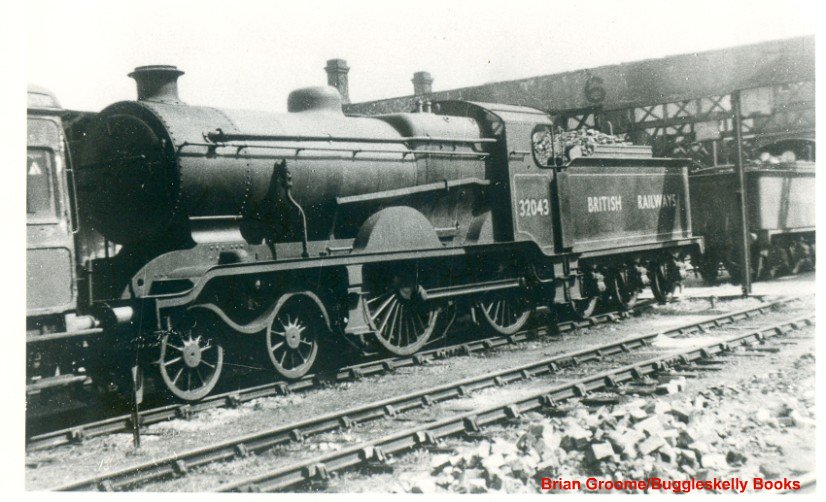
Outside of Eastbourne shed c. 1949. 4-4-0 No. 32043.
LOCOMOTIVE JOURNAL
AUGUST 1949
PORTSMOUTH (1) BRANCH
At a special open meeting with Portsmouth No. 2, we had the honour of our E.C. Member, Bro. G. Pavey, who gave us an interesting report on the Double Home Workings and Lodging Turns of Duty, and the present crisis on the Railways. Bro. Davey spoke for 50 minutes and answered questions for 40 minutes, which was very interesting. A vote of thanks was recorded to our members, and we hope to see him again.
At the July meeting we had correspondence of the Double Home and circular of Wages negotiations, also a considerably long discussion on the proposed Presentation suggestion.
Although the attendance at these meetings is increasing we still wish to see the younger ones come along. What I cannot understand is, that with the present railway crisis, it is left to the regular ones to decide our future policy.
H. HOPGOODBRANCH SECRETARY
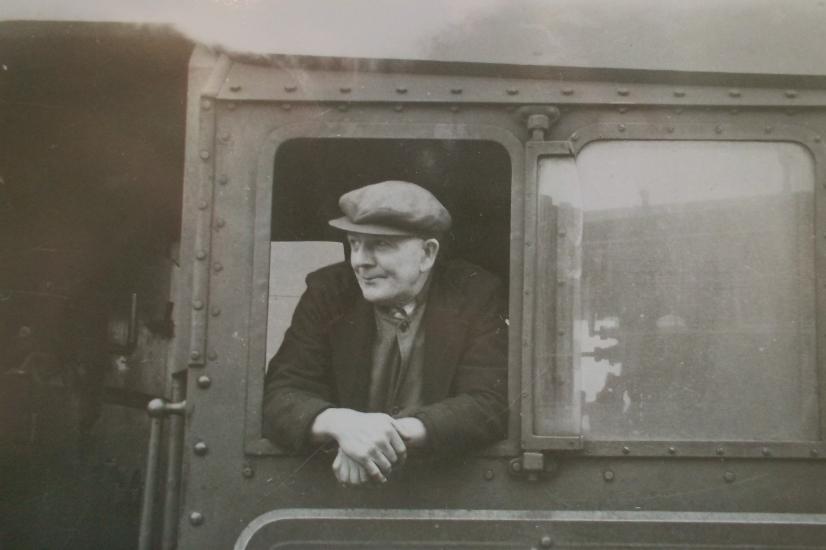
Horsham Driver Dickey Doel
Walter Doel, seniority date 07.06.1920 – Eastleigh /Horsham. Walter, was known as Dick and later Engineer ( this was because he stated that drivers were locomotive engineers according to A.S.L.E.&F.). He was a fireman at Horsham and when the Slades Green contingent arrived in 1926, was put back cleaning for a couple of years. Dick was one of the ‘Hornby’ men at Horsham.
Information by Brian Cooke
LOCOMOTIVE JOURNAL
OCTOBER 1949
BRIGHTON BRANCH No. 2
I am glad to report that some of our members at Brighton are waking up to the fact that we
have a branch, and the attendance on the other shift is becoming larger. Why not our shift as
well? It is only two hours, one night a month, first and second Thursday in each month,
especially now we are going forward with our own L.D.C.
Come forward with your complaints and get them remedied in the authorised way.
C. A. BATCHELOR
BRANCH SECRETARY
The 88 hour fortnight was implementation and became operative on Monday 31st October 1949. This result in a 44 hour working week with a rest day one a fortnight.
Railway accidents on British Railways
Southern Region
Central Division
LOCOMOTIVE JOURNAL
DECEMBER 1949
EDITOR'S NOTES
SECTIONAL COUNCIL ELECTIONS
In this column over twelve months ago (November, 1948), reference was made to develop-ments in connection with the setting-up of new Sectional Council machinery for the various
Regions of British Railways.
Since that time progress has been impeded by difficulties arising ill the process of reaching finality in determining the electoral areas. These difficulties, we are happy to say, have now been removed; and in Head Office Circulars dated October 31st last, our branches have been advised of the set-up of their respective electoral areas and invited to submit nominations for the positions of Official Candidates for Sectional Councils No.2.
Under the arrangements which have been made by our Executive Committee, all stages of the Society's internal selection procedure will have been completed by February 1st, 1950, and our candidates will be ready to take the field. All the indications are that the actual elections to the Councils will commence shortly thereafter with the issue of notices by the Regional Staff Officers calling for nominations from the staff.
Thus the outstanding task for each one of us has been set, so far as the early months of next year are concerned-the task of ensuring victory for the Society's candidates and policy in the full-scale "general election" which will take place throughout the Regions. Notwithstanding the fact that the overwhelming majority of locomen are enrolled in this Society, we must be prepared for opposition along the whole line. A determined attempt will undoubtedly be made, by means of these elections, to interfere to the utmost with the continuity of "Associated" policy at Sectional Council level.
We therefore take this early opportunity of emphasising the importance of unremitting vigilance and activity. The feeling that "the opposition are just wasting their time and money," however justifiable in itself, nevertheless cannot justify inertia on our part. We
are our not only to win the seats but by the size of our majorities to demonstrate to all concerned The basic demand of the footplate staff; That policy shall be controlled not merely by, but also FOR AND ON BEHALF OF, the grades which we exist to represent.
LOCOMOTIVE JOURNAL
DECEMBER 1949
LEATHERHEAD BRANCH
At our October 27 monthly meeting we had the pleasure of having our Organising Secretary, Bro. W. Cleaver, pay us a visit. Several question were asked by our members and suitably replied to, including pensions; our urgent desire and one which every member of the Secretary should fight and strive for, to keep it the Society’s Priority No.1.
Our branch has now been formed for two years and I am very pleased to report that our attendances are quite good on the average.
Bro. A. Dean, Chairman of (W) L.D.C., gave us a report of the 88 hour fortnight implementation operative on October 31. Bro. W. Cleaver then made a presentation of a wrist watch to Bro. M. Crocombe, of Effingham Junction, who has resigned from railway service owing to ill-health, from his workmates and fellow branch members on the Southern Region. A good Society member of the branch, whom all are sorry to lose.
Thanks to visiting members who came along from other branches.
E.J. Beecher
Branch Secretary

NIGEL BUCK COLLECTION
Tim Turner
Three Bridges Fireman, Littlehampton driver
LOCOMOTIVE JOURNAL
DECEMBER 1949
ORGANISING SECRETARY REPORT
W.J. CLEAVER DISTRICT NO.7
extracted and adapted from the report
To address branch or special meetings I have visited Southampton, West Brompton, Selhurst (twice), Slough, Watford, Didcot, Hounslow, Leytonstone, and Leatherhead. Attendance honours to Leatherhead, where 50 per cent of the branch membership tried up for the presentation of inscribed wrist watch to Bro. Crocombe. After many years’ service on the S.R., Bro. Crocombe has unfortunately failed to retained his standard of medical fitness for the cab and consequently has severed his connection with British Railways. Tribute to our member’s valuable assistance to the Society was paid by the branch members who, in brief speeches, associated themselves with the presentation.
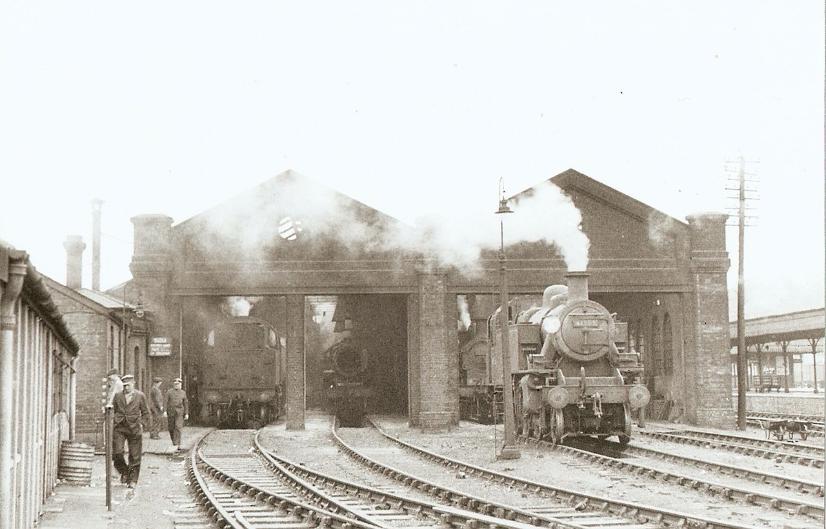
PHOTOGRAPHERS UNKNOWN
Tunbridge Wells West Loco Shed
LOCOMOTIVE JOURNAL
DECEMBER 1949
SELHURST BRANCH
Since our last report we have had visits by Bro. Cleaver (Organiser), to address members on the vexed question of Housing. Whilst the present system gives only limited scope to him as Liaison Officer, our members are satisfied that motormen are at least having consideration alongside other key grades.
Rest Days! Implementation of same has revealed the the Electrical Section is working very near the bone for manpower. This position will have to be closely watched by Sectional Council.
We had the pleasure of Bro. W. Isaac, Chairman of Sectional Council Employees Side, at our October 27 meeting, his short address was appreciated by all present.
All men in Steam and Electrical branches in electrified areas are asked to take note of the promotional machinery that will soon be a national agreement. There are some far-reaching changes. Go to your meetings and keep in touch with current affairs! On the lighter side, we had our first Social and Dance on October 21. Results were very encouraging. Out best thanks to all who made the evening successful, including Mrs. and the Misses Boniface and Bro. Mutter for raffle prizes - and our colleagues from Wimbledon and Norwood Junction for their support. Don’t forget Carnival Dance, December 28! Let’s have a “Bumper” evening together.
W.B.
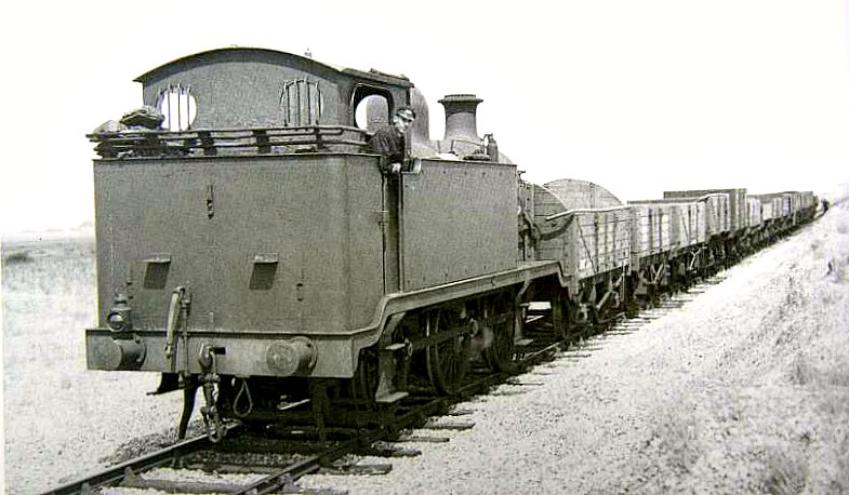
PHOTOGRAPHER UNKNOWN
Eastbourne driver working on the Crumbles Branch line
LOCOMOTIVE JOURNAL
DECEMBER 1949
LONDON BRIDGE BRANCH
The branch meeting on November 7 was fairly well attended. Information from Head Office re me booked to work rest day aroused much interest and comment, also items in AA.A.D. Report affecting motormen. More young motormen should have been present to hear matters concerning their future.
On October 29 members of the Social Fund and their wives had a pleasant evening to the London Hippodrome and afterwards had dinner at the Tree Union Clib. After dinner the Branch Secretary thanked Bro. H. Rick the Social Fund Secretary, and Bro. T. Poulter for arranging such an enjoyable evening for all present.
The members were pleased to have Bro. J. Parsons with them again, after nine months’ absence through accident. A present was made to Bro. Parsons from the Social Fund; it is a pleasure to record such evidence of brotherly feeling.
W. ALDERMANBRANCH SECRETARY
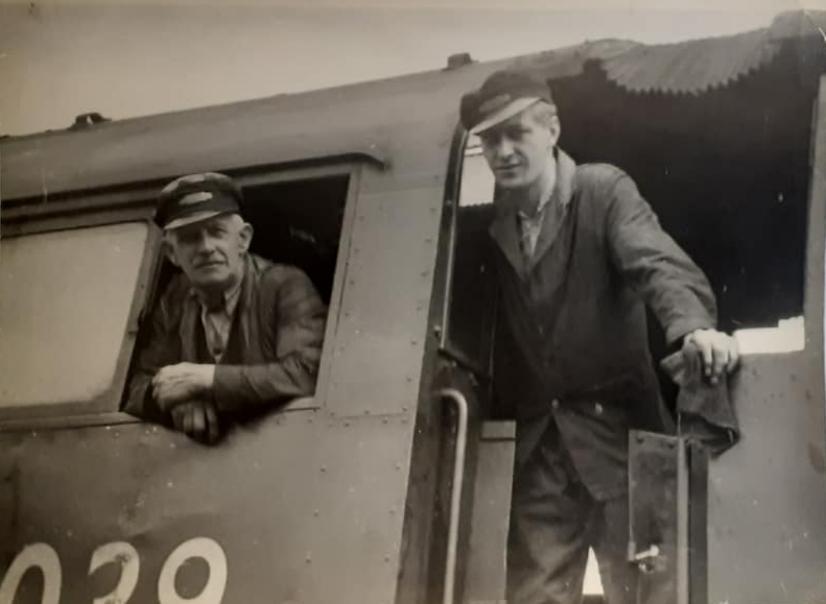
When most of us are preparing for Christmas, Mr. Alf Brooker and his mate, Mr. Frank Heritage, will be on the job, hurtling through the Sussex country side at anything uo to 70 miles an hours. For Mr. Brooker and Mr. Heritage are driver and fireman of one of the Southern Region’s crack West Country class express engines, working long distance expresses out of Brighton.
This week I spent a day with Mr. Brooker and his mate and saw the part they are playing in the Christmas holiday rush. Having done so I can assure all those who might travel this Christmas that if their train is a few minutes late it will not be the driver’s fault.
After pushing my way through the crowd of passengers waiting for the 11o’clock train from Brighton to Cardiff. I clambered aboard the engine which had just backed in from the sheds. Fireman Heritage was coupling up withe the leading coach, while his mate was making a last minute check on the lubricating system.
Driver Broker, who lives at 84 Elm Grove, Brighton, is one of the many veterans who drive Britain’s mainline trains. Joining the old London, Brighton and South Coast Railway in 1907. he has been on the footplate for 40 years: he can remember the days when a driver earned 4s. 3d. per day for anything up to 14 hours’ work, and speak affectionately of many types of engines now out of use.
Fireman Heritage, of 12 Coleman Street, Brighton, is 23, and has been with the railway since 1943.
These two representative of two completely different eras, work in complete harmony, the fireman anticiating the driver’s calls upon the engine by providing the steam required. If it were not so it would mean bad running, with not enough power for the banks and too much pressure at the end of journey.
We’re Off!
As the fingers of station clock drew near to the time of departure, porters fussed around the doors, bags of Christmas mail for South Wales were swung into the brake van, and the platform foreman stood ready to give the all-clear signal.
Home and distant signals were both showing green. Suddenly from the near the barrier there was a flash of green. Driver Brooker eased the regulator open and we were off.
Behind in comfortable, heated compartments, passengers were beginning to open magazines and newspapers, but on the footplate all was activity.
The first shovels-fulls of the two tons of coal used between Brighton and Salisbury were being fed into the hungry mouth of the firebox: the first gallons of the 3,500 gallons of water were being converted into steam.
The run to Worthing was punctuated with delays at signals, costing five minutes’ valuable time. Signals also proved a hindrance as far as Ford, probably due to a stopping train for Littlehampton which left Brighton a few minutes before us.
At Barnham we were seven minutes late, and here Driver Brooker explained to me why it does not pay the engine crew to lose time. “We have a very quick turn round at Salisbury,” he said, “which only leaves us about half an hour for lunch. So if we lose time on this run we go without our dinner.
Another point of interest is that these long distance men get paid on mileage rates, based on a daily run of 140 miles, so that anybody who might think that it pay a driver to run late for the sake of overtime is badly mistaken.
Schoolboy Enthusiast
On the platform at Chichester was a young schoolboy. He looked up with obvious hero-worship at the driver, and began asking questions about the engine. “These youngsters know nearly as much about engines we do,” said Mr. Brooker with a wink. Then as the right-away signal was given and he reached for the controls “open the regulator,” said the young enthusiast “See you tomorrow!”
Sitting in the fireman’s seat on the right hand side of the cab, I had a unobstructed view forward and watched fascinated as the 280 Ibs per square inch boiler pressure was gradually unleashed and we picked up speed.
The sleepers, which until now had been passing shadow like beneath merged into one continuous blur. “When they do that we know we’re doing about sixty,” said Mr. Brooker. As the speed increased I found I could stand and write in my notebook wit ease, so smoothly do these giants ride, something of a contrast to a trip I experienced on the footplate of a northbound express before the war, when I was nearly jolted out of my skin.
We were six minutes late passing Havant, and then once over the Fratton Junction we gained speed again into Fareham dead on time. Here the thirsty engine was given more water, while four more coaches were shunted on to the rear of the train.
The Melty Road
Leaving Fareham we commenced to negotiate a stretch of line which is know to engine crews as the most difficult in the sector. It is called the Melty Road and consists of switch-back like gradients many of the climbs being made on sharp curves. A coach limits 15 imposed here, engine of the West Country class, most powerful for their size in the country, being allowed 15 coaches.
Clovelly, as our engine is named, climbed the bank without any of the chuffing and snorting one usually associate with a gradient of about one in 55. “No trouble with these engines,” said Mr. Brooker. “Theres always just the little bit spare.”
Leaving Southampton behind we roared through fields and villages, bathed in winter sunlight. Here and there a woman waves from a garden. “They all know us,” said Mr Brooker. I permitted myself the luxury of a wave back.
After a short climb, Fireman Heritage dew my attention to a bridge “That’s bridge 44” he told me, the fireman’s harbour light. no need to stoke any more. We’ll see Salisbury Cathedral in a minute.
And as we wound over the points into Salisbury station the cathedral spire pointed skywards, its tip surmounted by scaffolding, looking rather like bandaged finger.
Roaring Through The Night
The return journey, partly through the darkness, was also exhilarating affair. Heavy holiday traffic from the West Country had necessitated 15 coaches on the train, weighing over 400 tons. Headed by Merchant Navy class engine drew in from Plymouth nearly three-quarter of an hour late.
With all possible speed engines were changed, and puffing and snorting, driving wheels slipping occasionally on the greasy metals, we moved off looking backwards, the train appeared like a long snake as it wound around the curve out of the station.
With a clear road, except for one stop at signals at Romsey, we made up time to Southampton, where seven coached were dropped. From here the journey was made in darkness, driver and fireman watching for the pin points of green light which told that the way was clear. Stations appeared like island of lights which loomed out of the distance into the background.
Illuminated by electric light the gauges showed a full head of steam, the fire box when open threw out a blinding heat an a glow which lit our faces and transformed us so that we must have appeared like friends riding some monster into the jaws of hell.
“Rat-a-tat-tat,” said the wheels; Pssssssssss,” hissed the steam; “Clang” went the fireman’s shovel, and above it all sounded the majestic song of power, as though the engine herself were proud to be devouring those precious lost minutes.
Disappointment
Then came the disappointment. After gaining a considerable amount of the time lost, signals slowed us down or brought us to a halt many times between Ford and Brighton and all the effort was frittered away.
Perhaps some driver would not have cared, but this one did. Like many others he takes a pride in bringing his train in on time.
When I am eating my Christmas dinner tomorrow I shall be thinking of Mr. Alf Brooker and Mr. Frank Heritage and the thousands of other who will spend Christmas away from home serving the public.
G.E.C
From the Brian Lawrence Collection
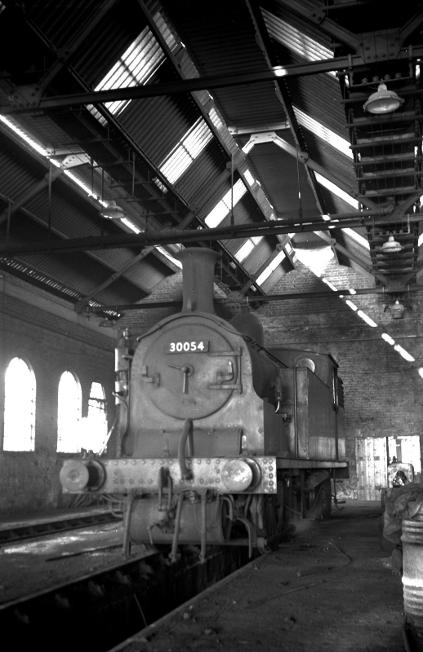
PHOTOGRAPHERS UNKNOWN
Inside Tunbridge Wells West Loco Shed