THE BRITISH TRANSPORT COMMISSION WAS REPLACED BY
THE BRITISH RAILWAYS BOARD IN 1963,
AND OPERATES AS BRITISH RAIL
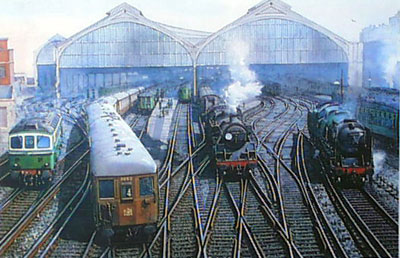
WEST CROYDON15th JANUARY 1963
EXTRACTED & ADAPTED FROM
BLOOD & CUSTARD WEBSITE
On the 15th January, 1963, a collision occurred in No. 3 Up Siding at 11.47 p.m. when a Empty Coaching Stock was misrouted into a full siding.

LOCOMOTIVE JOURNAL
JANUARY 1963
LONDON BRIDGE BRANCH
Smog and the extreme wintry spell played havoc with our December and January meetings, so that a good muster at the February meeting faced a heavy agenda and backlog of necessary business. Completing the Branch elections, we again have a well balanced team of senior Offices; Bros. H. Bagilhole and K. Lindsey as Chairman and Vice Chairman, D. Greenway and J. Whiley, Secretary and Assistant Secretary. Other pleasing appointments include younger potential in Bros. G. Allen, E.J. Barnes and D. Upton.
Don Pullen receives our best wishes as Irish Officer, a position we k now he will justify. His flair for organising will prove him a valuable assets to the Society’s Officers in these times of sweeping changes in the industry. Good Luck, Don!
L.D.C. report dealt with management obstruction to the settlement of necessary alterations to Charing Cross messroom, allocation of Sunday work, restricted cab view from badly positioned sun visors, limited parking facilities for staff at Charing Cross, and proposed safety measures at Cannon street, Home Signals.
A warning came from the Chair for members to make more efforts to avoid being in arrears, and a tribute to our Secretary and his helpers in further elimination of th few NONS in our midst in this area.
H. Bagilhole
Branch Chairman

PECKHAM RYE30th JANUARY 1963
EXTRACTED & ADAPTED FROM
BLOOD & CUSTARD WEBSITE
On the 30th January, 1963, a collision occurred at Peckham Rye station at 6.39 a.m., when the 6.18 a.m. London Bridge to Victoria service run into the rear of the 6.24 a.m. London Bridge to Horsham service.
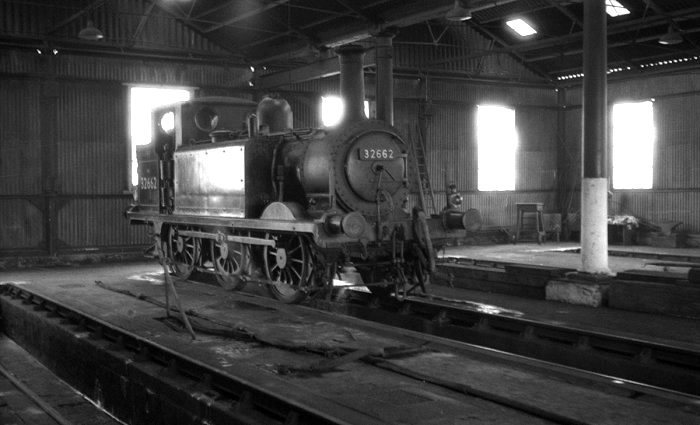

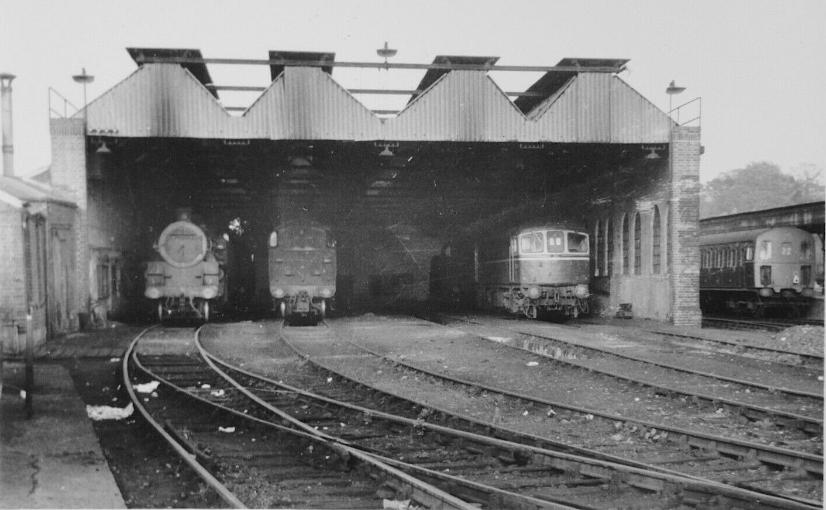
The Tunbridge Wells (West) Loco shed was closed on the 9th September 1963, by the British Railways as a result of dieselisation and a D.E.M.U. depot was established in its place.
PHOTOGRAPHER UNKNOWN
T.W.W. Shed seeing the transition from steam to dieselisation
Railway accident on British Railways
Southern Region
Central Division
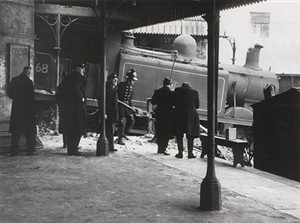
BUFFER STOP COLLISION AT KEMP TOWN
8th JANUARY 1963
INVOLVING DRIVER JOHN WOOD & HIS FIREMAN JOHN MYLES
PHOTOGRAPHER UNKNOWN
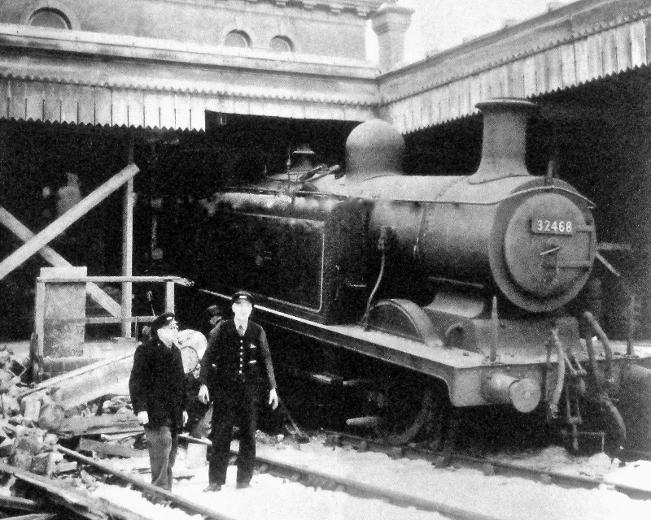
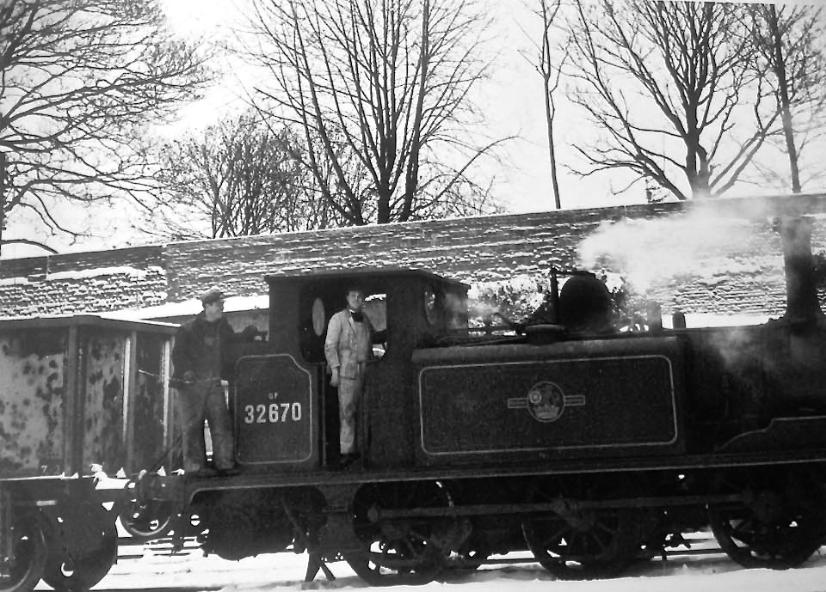
The scene at Kemp Town Good station on Tuesday 8th January 1963, when the 08:00 Brighton (Top Yard) come out of Kemp Town tunnel and the wheels of the "E" class 0-6-0T No. 32468 started slipping on the icy rails. The engine finally come to stand on the station concourse. The train was worked by Brighton driver John Wood and his fireman John Myles.
PHOTOGRAPHER UNKNOWN
The railwaymen featured in this photo are not known
As reported in The Evening Argus on the same day.
A 50 ton shunting engine ploughed into Kemp Town Goods Station demolishing buffers, part of the platform and the station office today. The engine, pulling loaded trucks weighing another 120 tons, skidded on ice covered lines as it approached the station.The driver John Wood and his fireman John Myles, were taken to the Royal Sussex County Hospital for a check-up. The firemen were called to put out the engine's fire and reduce steam pressure in case of an explosion. Later they cleared the wreckage.
Two station staff had quickly escaped. Mr Albert Streeter, of St Peter's Street, Brighton, and Mr. William Speed, of Donald Hall Road, Brighton, left the office about two minutes before the crash. "I must have had a premonition or something" said Mr. Streeter. "We are normally in the office at that time, but this morning we decided to go and check over some goods trucks."Lorry driver Maurice Cole, of Lansdown Place, Hove, who was loading brick at the station, said: "I saw the wheels skidding and knew there had to be a crash. It cut into thestation like a bacon slicer. The noise was like a bomb going off."
* There is no Ministry of Transport report into this accident
Railway accident on British Railways
Southern Region
Central Division
PHOTOGRAPHER UNKNOWN
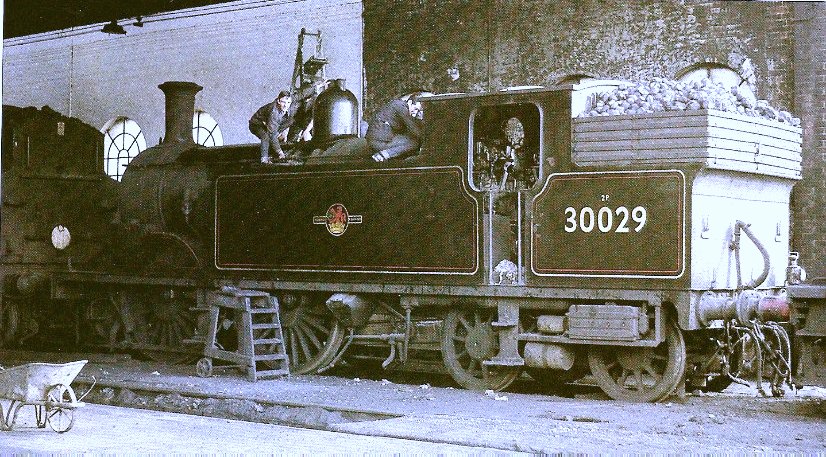
T.W.W. Engine Cleaners inside T.W.W. Loco Shed in March 1963.
Six months later it would be a different scene
LOCOMOTIVE JOURNAL
MARCH 1963
LEATHERHEAD BRANCH
I take this opportunity of wishing Bro. Don Pullen the very best of luck and tendering hearty congratulations on his success in obtaining the majority vote for Organising Secretary's position.
Our branch has just completed fifteen years since opened; we still have very good meetings and I'm pleased to say these are the size of the branch.
At our last meeting six of our members were presented with 40 years' badges. They were Bros. W. Chandler, R. Martin, W. Ayres, G. Peters, J. Goldsmith, And A. Murray.
Also presentation was made by the chairman to Bro. A. Bonnick, who is retiring shortly; the token of good wishes from the members of the branch was a leather writing set.
E.J. Beecher
Branch Secretary
LOCOMOTIVE JOURNAL
APRIL 1963
ADO ABOUT DIESELS
Sections of the press on 27th February carried report tending to indicate that arising from experience in recent wintry conditions the policy of British Railways in relation to diesel traction would seem to have been mistaken.
This suggestion was promptly denied by the Railways Board in a statement which it issued on the same date, and in the course of which it said that whilst the bad weather had "to a minor degree" accentuated teething troubles experienced with some diesel locomotives, general experience had not shaken the Board's confidence in this form of traction.
"The newspaper reports," said the Board. "have been based on a confidential memorandum presented to a recent meeting of the British Railways Productivity Council. This was not an official railways document, neither was it accepted by the Council. It was prepared by a railway officer as a basis for discussion but was not acceptable because the Council considered that it did not present a sufficiently balanced picture."
For our part we have no means of knowing how the contents of the unofficial memorandum leaked out, but the action of whoever was responsible cannot be deprecated too strongly. We are all in favour of letting the public know the facts so long as they are presented in full. For too long, however, railways and railwaymen in this country have had to bear the brunt of unfair criticism even ridicule based on exaggerations and distortions arising from partial presentation of facts and issues. As a nationalised concern, giving a personal service to countless citizens, whether as passengers or traders, British Railways are always a potential source of news. But unfortunately some sections of the Press, though not all, seem to work on the general principle that "bad" news is better news than good news so far as railways are concerned.
True it is, of course, that in the recent arctic conditions the performance of diesels was not on a par with that of the forms of traction. But the Board were rightly quick to point out that "there is nothing intrinsic in diesel locomotives which makes them less efficient in winter, as is shown by their use in Russia, Canada, and other countries where very cold spells are normal.
Incidentally, during the period which has elapsed since the Modernisation Plan was first announced, a lot of non railway people seem to have developed the mistake idea that British Railways are pinning their exclusively to the diesel as the means of traction of the future. Yet we are witnessing (for example) on the London Midland Region, from Manchester and Liverpool on the main line to Euston, the gradual extension of overhead electrification on a massive scale. Under the modernisation arrangements the British Transport Commission envisaged the conversion to electric traction, over a fifteen period, of no less than 1,210 route miles of trunk and suburban lines, as well as extending by 250 route miles of the Southern Electric networks it then existed; and electrification as thereafter to continue until applied to all lines upon which it could be economically justified.
Nonetheless, for many years to come the diesel locomotive will be called on to play a major part. In our view it will do this successfully; it is nether a "disaster" nor a "mistake." In severe wintry conditions it has presented certain special features e.g. freezing problems arising from use of water for cooling and for steam heating, which can and must be taken care of in readiness for future contingencies.
SHORTER WORKING WEEK
January 1st, 1962, saw the coming into operation of the 42 hour week in respect of the member grades of British Railway, following a long period go arduous negotiation which culminated in Railway Staff National Tribunal Decision No.25 of 12th December,1961. That Decision by a majority of the Tribunal upheld the contention of the A.S.L.E.&F. that the reduction from 44 to 42 hours in the standard working week for footple grades should be implemented by rostering such staff for one additional turn booked off in each period of four weeks.
Last year's Annual Assembly of Delegates, in endorsing the report made to it on this subject, reaffirmed the 40 hour week as the goal of the A.S.L.E.&F.
In the period which has since intervened, the position has continued to be kept under constant review by the Executive Committee. On the 11th of last month, on their instruction, an application in the following terms was submitted by letter to British Railways and to London Transport on behalf our members grades:
"The standard week's work to consist of 40 hours exclusive of Sunday, to be worked in five turns of eight hours, such reduction in working hours to be introduced without any reduction in rates of pay."
In pursuing the objective we shall, without doubt, encounter a variety of obstacles; we are used to meeting obstacles and doing our best to overcome them! At all events members may be assured that no effort will be spared by our negotiators in striving to bring the claim to successful conclusion.
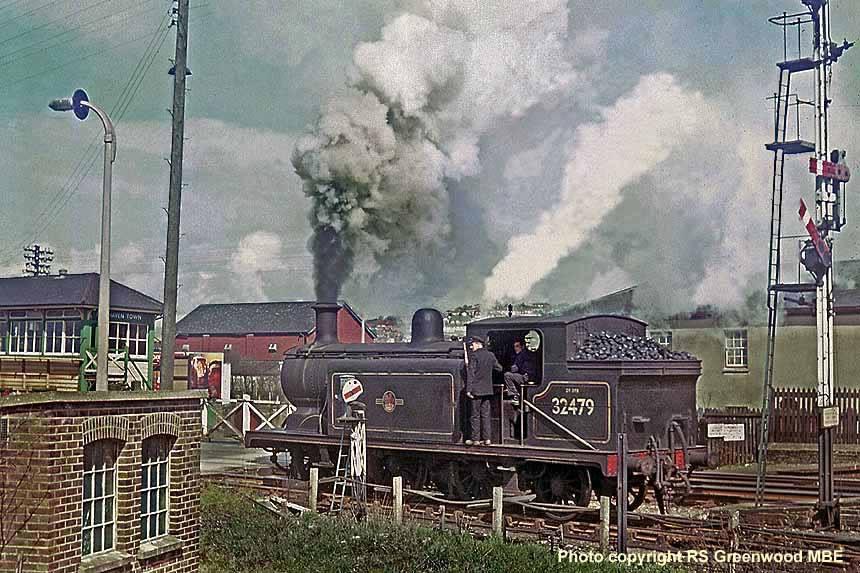
E4 0-6-2T 32479 was photographed at Newhaven as it returned to the shed
on Saturday afternoon 13 April 1963.
LOCOMOTIVE JOURNAL
APRIL 1963
PAGE 75
NORWOOD BRANCH
Several members recently transferred to Electrical branches, but new entrants keep the branch at strength, with Political and Journal sales good. Rule 5, Clause 14 is still “inadvertently forgotten” by quite a few; it is posted in our depot case just to refresh memories in the interest of those few. We think a “Closed Shop” is long overdue on our job, and this should be our motto 1963.
The L.D.C. have their plate full owing to continual alterations to engine workings, which makes social life nil. Revisions once each month now, plus the usual weekly alterations and daily tampering. “Birth control duties” increasingly; maybe this is why we are still short of 12 drivers. A joint approach by the Norwood L.D.C.s to higher officials and, unless matters are rectified, T.U. Head Offices can expect some fireworks! Essex House has some very competent officials. We say to them, “Get cracking on those who are taking us chaps for a ride.” Rosters are now just a mockery.
I retire from the B.R. in 12 months, so Norwood will want a Secretary. Any applications? Get cracking, chaps. Good luck to Bill Evans in the fight for the 40 hour week.
P.K. WILLSHAW
BRANCH SECRETARY
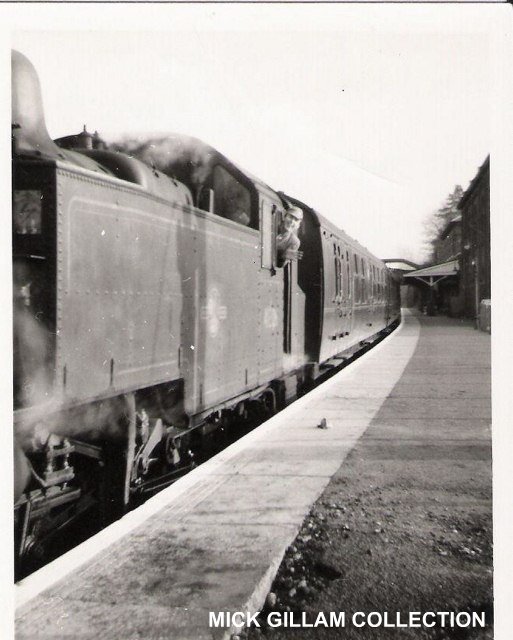
Mick Gillam started at Brighton as a Cleaner boy just after my 16th birthday in 1960 and got his job as a Fireman at Brighton in 1961.
Mick transfered to Coulsdon North 1967 to get his promotion to driver and later moved to Littlehampton 1969, and later become a Traction Inspector at Brighton in c1989, finished up at Barnham taking early retirement in 1994.
LOCOMOTIVE JOURNAL
APRIL 1963
DISTRICT COUNCIL No.4
Mr. B.J. Noakes, Brighton No.2 branch (West Worthing), becomes District Council Secretary.
LOCOMOTIVE JOURNAL
APRIL 1963
PAGE 74
BATTERSEA BRANCH
The New Year started with a marked improvement in our arrears, and we hope that things continue to improve in this respect.
Branch meetings have been fairly well attended; it seems that interest is growing, and this not before time, taking into consideration the vast amount of changes that are taking place amongst the Footplate grades.
A very pleasant evening was spent on 2 February, when the joint Social Section of Stewarts Lane and Victoria held a presentation at the Brunswick House Club to four retired members of Stewarts Lane Loco - Bros. W. Webb, A. Matters, S. King and W.C. Smith; unfortunately, Bros. King and Smith could not attend, due to indisposition. Bro. M.J. Renshaw made the presentation to those present. The final part of the presentation was to Bro. A. Bashford of Victoria; this was not an official act, but on behalf of his workmate Bro. Renshaw gave an envelope contains cash to Bro. Bashford. To all the retired members we wish a long and happy retirement.
The evening continued with dancing to the Thelma Hammond Band, and other entertainment was provided by Bro. Harris and His Boys. to all who helped to make this a pleasant evening, in spite of severe weather conditions, we extend thanks for their services.
R. WEEKS
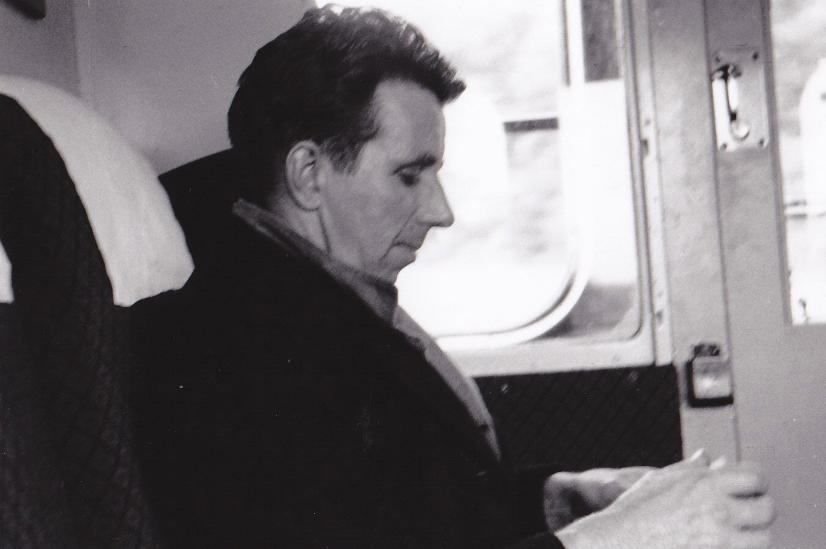
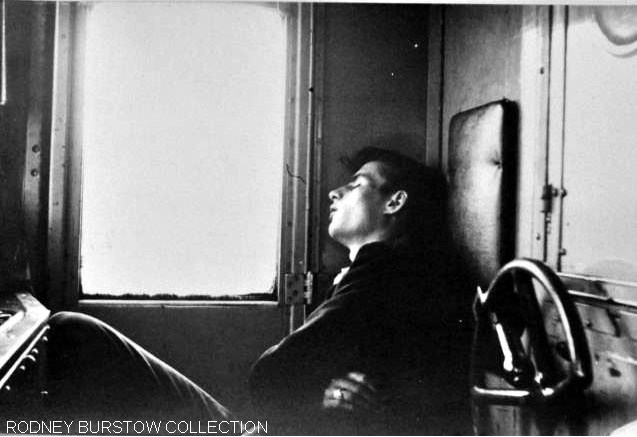
Dave and I used to fish Birchenbridge and retire to the Bell for a pint on the way home, I can
remember one time when a pint was one shilling a pint, (thats 5p for you youngsters), and Dave said I haven’t got enough for one and I only had about 6 or 7 pence, so we went up to his house and looked in and around the tins and made up enough for two pints each with pennies and hapny's, If he wasn't skinning a rabbit or gutting a deer!!! rolling a fag I guess! happy days.
Photo and memories from Rodney Burstow

MAY 1963 Freight Services ceased at Selham and Fittleworth in May 1963.
LOCOMOTIVE JOURNAL
MAY 1963
VIEWPOINT
THE REPORT - AND AFTER
The "Viewpoint" express in these notes this month is, in some degree at any rate, a personal one which I feel it is my duty, as a nationally elected Officer of the Society, to make known to the membership.
On 27th March the long awaited "Beeching Report" was made public, and the Press lost no time in sensationalising it to the utmost. The Report, based on a number of far reaching traffic studies, is designed to indicate to the Government and public two things, one negative and one positive; on the negative side, which traffic the railways should abandon, and, on the positive, which traffic they should seek to capture from the roads. If its proposals were adopted, about a third of the railway system would be eliminated and the remainder brought to a high state of commercial and operating efficiency, with freight transport especially in mind, freight traffic being regarded as the key to the survival of the railways. By stream-lining, elimination of certain goods depots and the introduction of "liner trains" the aim of the Report is to capture, in the main from medium and long distance road haulage, about 16 million tons of general merchandise traffic.
The report claims that an early implementation of its proposals would result in the liquidation by 1970 of a very large proportion go the Railway Board's colossal financial deficit.
On the appearance of the Report I made a statement to the Press, describing it as a very able document. I said that "in my view it represents an entirely honest attempt to rationalise the railway system in this country." I said also that this Society had never at any time declined to recognise the need for such changes as historical development had made necessary; and that "it will now be for Parliament to examine all the implications of the plan, social, political and otherwise, and to reach a verdict in due course."
So far as the position of our members is concerned, I went on to add the following, which I quote in full because the Press for the most part did not do so:-
"speaking for my own Society, I say quite plainly that we should be doing our member a grave disservice if we failed to look practical necessities in the face. Our duty is to see to it that, whatever changes may be made, justice and humanity prevail so far as our members' interests are concerned. We have also to ensure that in a rationalised railway system the men at 'the front end' enjoy both rates of pay and conditions of service appropriate to the vital importance of their key position in the industry. These are our tasks and we shall not falter in pursuing them."
On 28th March the Executive Committee in their Resolution No.301/260 "vehemently repudiated" my statement.
"This" (they said) "was given with complete disregard to the view of this Executive Committee and the 1962 A.A.D. decision on closures of branch lines and the withdrawal of services, which we are instructed to oppose by all forms of action, industrial action, if necessary."
They decided that a further statement be issued "on behalf of the Executive Committee and membership, that not only will justice and humanity prevail, but this Society will issue all italics efforts to join with other rail unions to give the fullest protection to the members or staff in the Railway Industry, in all action they think necessary to protect Footplatemen and the interests of an adequate Railway system in this country."
In Resolution No. 305/260 on the same day the Executive Committee further decided to seek an early joint meeting of the Railway Trade Unions on the Beeching Plan for the re-shaping of British Railways.
at the time of writing joint talks with other unions concerned are in progress. Their outcome will doubtless be known these note appear in print.
On 2nd April the Executive Committee adopted the following further Resolution, 316/260:-
"That in giving consideration to the British Railways Board report on the reshaping of British Railways, this Executive Committee expresses serious concern at the failure of the report to meet the needs and services of the people. The suggested widespread closures and withdrawals of services is only another method of transferring from the nationalised railways to private road industry.
"This Executive Committee is convinced that the only fair method of planned transport is a fully integrated system of road and rail transport for the whole of the country."
"Further, the General Secretary should advise the T.U.C. and Labour Party of our opposition to the report on Reshaping of British Railways."
"An early joint meeting of Rail Unions be called, our policy to be in keeping with 1962 A.A.D. decision."
"Branches should be advised of the contents of this resolution and urged to send delegates to local Labour Party and Trades Council meetings, protesting against the Reshaping of British Railways in its present context."
"Further, that branches be urges to purchase one copy of the Reshaping of British Railways and the expense of such will be met by Head Office if local branch funds are not available for this purpose."
Having reported the foregoing facts I wish to make a few strictly personal observations. I feel very earnestly that my position as a nationally elected Officer, to which I have already referred, not only entitles, but obliges me to make my personal attitude known in a time of such moment to everyone concerned.
1, The 1962 A.A.D. decision had reference to a basically different set of circumstances. That A.A.D. was not faces with a coherent, all embracing blueprint for the future of the railways. It did not have before it any comprehensive agreement covering the questions of redundancy or resettlement. (Even so, its decision ran counter to what had been E.C. and A.A.D. policy ever since the issue of the White Paper in December 1960, but that by the way.)
2. In my opinion it would be found, in the event of any integrated transport system being devised, under nationalisation or otherwise, that a reshaping of railways on Beeching lines, as part of such a scheme of integration, could not in fact be escaped.
3. Railwaymen are sick and tired of working for a bankrupt concern, just as they are tired of being the undeserving butts of every comedian looking for a cheap laugh. They and their union representatives are tired of having the financial position thrown up every time they see some improvements in pay and conditions. Under a new and revitalised railway set up it will be within the power of the unions to revolutionise the status of the staff, above all, it will be possible for locomotivemen, through the medium of their craft organisation, the A.S.L.E.&F., to be raised to their rightful standing and all that should go therewith, in terms of pay and conditions no less than in prestige.
It is not too much to say that at this present time the Society and its member grades stand at the parting of the ways.
"There is a tide in the affair of menWhich, taken at the flood, leads on to fortune;Omitted, all the after voyage of their livesIs bound in shallows and in miseries."
In other words, this is not time for clinging to the tailboard of somebody else's band wagon.
LOCOMOTIVE JOURNAL
MAY 1963
THREE BRIDGES
PAGE 99
The first meeting of the year had the usual attendance. Interesting and lengthy discussion took place on several important circulars. On the circular dealing with redundancy and resettlement, the money given to the older man was considered inadequate.
The Agenda of Suggestions for the A.A.D. was discussed with a view to forming amendments. In the list of delegates it was noted that four groups did not at stage have a delegate; this was considered deplorable, and about time all groups elected their delegates.
A number of local items were discussed including the low number of Passed Fireman at the depot, and a resolution was formed to be replaced before the management insisting that men eligible be passed. Also discussed were a number of minor link alterations.
A general discussion took placed at the end on the submitting of proposals to improve duties and other items dealing with economy, and it was noted that replies are rarely received from the management.
The next two branch meeting are 9 and 16 May.
Branch Chairman
TODD SLAUGHTER COLLECTION
Left - Right Brighton Pased Fireman Fred Maskell
& Brighton Driver Robert “Todd” Slaughter
LOCOMOTIVE JOURNAL
MAY 1963
THE REPORT AND AFTER
The "viewpoint" expressed in these notes this month is, in some degree at any rate, a personal one which I feel it is my duty, as a nationally elected Officer of the Society, to make known to membership.
On 27th March the long awaited "Beeching Report" was made public, and the Press lost no time in sensationalising it to the utmost. The report, based on a number er of far reaching traffic studies, is designed to indicate the Government and public two things, one negative and one positive; on the negative side, which traffic the railways should be abandon, and, on the positive, which traffic they should seek to capture from the roads. If its proposal were adopted, about a third of the railway system would be eliminated and the remainder brought to a high state of commercial and operating efficiency, with freight transport especially in mind freight traffic being regarded as the key to the survival of the railways. But streamlining, elimination of certain goods depots and introduction of "liner trains" the aim of the Report is to capture, in the main from medium and long distance road haulage, about 16 million tons of general merchandise traffic.
The Report claims that an early implementation of its proposals would result in the liquidation by 1970. of a very large proportion of the Railway's Board colossal financial deficit.
On the appearance of the Report I made a statement to the Press, describing it as a very able document. I said that "in my view it represent an entirely honest attempt to rations the railway system of this country." I said also that this Society had never at any time declined to recognise the need for such changes as historical development had made necessary; and that "it will now be for Parliament to examine all the implications of the plan social and otherwise and to reach a verdict in due course."
so far as the position of our members is concerned, I went on to add the following which I quote in full because the Press for the most part did not do so:-
"Speaking for my own Society, I say quite plainly that we should be doing our members a grave disservice if we failed to look practical necessities in the face. Our duty is to see to it that, whatever changes may be made, justice and humanity prevail so far as our members' interests are concerned. We have also to ensure that in a rationalised railway system the men at 'the front end' enjoy both rates of pay and conditions of service appropriate to the vital importance of their key position in the industry. These re our tasks and we shall not falter in pursuing them."
On 28th March the Executive Committee in their Resolution No.301/260 "vehemently repudiated" my statement.
This (they said) "was given with complete disregard to the view of this executive Committee and the 1962 A.A.D. decision on closures of branch lines and the withdrawal of services, which we are instructed to oppose by all forms of action, industrial action, if necessary."
They decided that a further statement be issued "on behalf of the Executive Committee and the membership, that not only will justice and humanity prevail, but this Society will use all its efforts to join with the other rail unions to give the fullest protection to the members or staff in the Railway Industry, in all action they think necessary to protect Footplatemen and interests of an adequate Railway system in this country."
In Resolution No. 305 260 on the same day the E.C. further decided to seek an early joint meeting of the Railway Trade Unions on the Beeching plan for the re-shaping of British Railways.
At the time of writing joint talks with other unions concerned are in progress. Their outcome will doubtless to be known when these notes appear in print.
On 2nd April the E.C. adopted the following further Resolution 316/260:-
The in giving consideration to the British Railways Board report on the reshaping of British Railways, this E.C. expresses serious concern at the failure of the report to meet the needs and services of the people. The suggested widespread closures and withdrawals of services is only another method of transferring more traffic from the nationalised railways to private road industry.
This E.C. is convinced that the only fair method of planned transport is a fully integrated system of road and rail transport for the whole of the country.
Further, the General Secretary should advise the T.U.C. and Labour Party of our opposition to the report on Reshaping of British Railways.
An early joint meeting of the Rail Unions be called, our policy to be in keeping with the 1962 A.A.D. decision.
Branches should be advised of the contents of this resolution and urged to send delegates to local Labour Party and Trades Council meetings, protesting against the Reshaping of British Railways in its present context.
Further, that branches be urged to purchase one copy of the Reshaping of British Railways and the expense of such will be met by Head Office if local branch funds are not available for this purpose.
Having reported the foregoing facts I wish to make a few strictly personal observations. I feel very earnestly that my position as a nationally elected Officer to which I have already referred not only entitles, but obliges me to make my personal attitude known in a time of such moment to everyone to concerned.
1. The 1962 A.A.D. decision had reference to a basically different set of circumstances. That A.A.D. was not faced with a coherent, all embracing blueprint for the future of the railways. It did not have before it any comprehensive agreement covering the questions of redundancy or resettlement. (Even so, its decision ran counter to what had been E.C. and A.A.D. policy ever since the issue of the White Paper in December 1960 but that by the way.)
2. In my opinion it would be found, in the event of any integrated transport system being devised under nationalisation or otherwise that a reshaping of railways on Beeching lines, as part of such a scheme of integration, could not in fact be escaped.
3. Railwaymen are sick and tired of working for a bankrupt concern, just as they are tired of being the undeserving butts of every comedian looking for a cheap laugh. They and their union representatives are tired of having the financial position thrown up every time they seek some improvement in pay and conditions. Under a new and revitalised railway set up it will be within the power of the unions to revolutionise the status of the staff above all, it will be possible for locomotivemen, through the medium of their craft organisation the A.S.L.E.& F. to be raised to their rightful standing and all that should go therewith, in terms of pay and conditions no less than in prestige.
It is not too much to say that at this present time the Society and its member grades stand at the parting of the waves.
"There is a tide in the affairs of men, Which taken at the flood, leads to fortune; Omitted, all the after voyage of their lives Is bound in the shadows and in miseries."
In other words, this is no time for clinging to the tail board of somebody else's band wagon.
Extracted and adapted from
Tunbridge Wells Branch Meeting
Sunday July 30th 1963 at 10.45 p.m.
at the Welfare Rooms, Central Station.
Correspondence was then read mainly regarding alteration and amendments to the present redundancy arrangements to the present redundancy arrangements that have brought about by the Beeching Report.
The Secretary Bro. B. Gower expressed his disgust at the Society for their apparent lack of interest in the threatened closures of lines and stations in our area no correspondence had been received from Head Office re Closures since 16th of April, this was shared by all members and it was decided that a resolution from this branch be sent to Head Office deploring their lack of action and interest.
It was also decided that a letter be written to Lord Storham, Chairman of the Inland Transport Committee giving our views as to the methods of the B.T.C. in giving the public as poor as service as possible on lines due for closure.
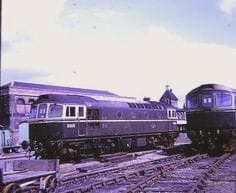
PHOTOGRAPHER UNKNOWN
Tunbridge Wells West
TYPE 3 (Class 33) Diesel Locomotives replacing the Steam Locomotives
The official last day for the end of steam allocation was 31st August 1963
Extracted and adapted from
Newhaven Branch Meeting
Sunday June 30th 1963
Closure Newhaven Loco 9th September 1963.
L.D.C. & Branch Secretary Reports: -
Correspondence to and from E.H. Channing, Secretary S.C. No.2.
The position of men who took priority was made clear to all present. Bro. T. Holder gave a report of a meeting at Essex House held on Friday 28th June 1963. S.C. No.2 Staff-Side present: - E.H. Channing Secretary, M. Kenshall, Bro. Perry Sec. elect. Members present from Newhaven Loco: - Bros. T. Holder, W. Folwell, and V. Morris & R. Turner. The subject matter was fully dealt with, to date the arrangements were
14 Drivers & W. Terrill to Brighton, 1 to Eastbourne. 6 Drivers not covered.
10 Firemen to Brighton. 4 Firemen not covered.
The following was agreed "That Secretary write to Bro. C. Dray asking if he objected to Bro. E.H. Channing visiting our Branch."
After the reply from Bro. Dray the Secretary write to Head Office requesting the attendance of Bro. E.H. Channing.
The Secretary ask for replies to the following questions. The wording was also agreed by the members present.
1. Where a driver has already a registration to Seaford E.M.U.T., will it be necessary for him to state his first preference Seaford E.M.U.T. on his redundancy paper?
2. Can you let this Branch know how the 14 Drivers, 1 Shed Engineman and 10 Fireman to be allocated to Brighton Loco was arrived at?
3. can you let us know where in the re-settlement arrangements the position is covered which allows the Management to determine that no Newhaven Driver will be entitled to this payment, bearing in mind the first train arrives at Brighton at 6.55 a.m. and the last train leaves Brighton at 11.33 p.m. Many of our Drivers use no private transport and do not wish to lodge at Brighton.
It was learnt at the Newhaven branch meeting on the Sunday 1st September Bro. R. Turner had decided not to go into Brighton, which meant all Newhaven Drivers would go into Brighton (1 to Eastbourne).
STREATHAM HILL12th JULY 1963
EXTRACTED & ADAPTED FROM
BLOOD & CUSTARD WEBSITE
On the 12th July, 1963, a collision occurred when the 7.30 a.m. shunt move, Run Away and collided with stop block at Balham Junction.

VICTORIA1st AUGUST 1963
EXTRACTED & ADAPTED FROM BLOOD & CUSTARD WEBSITE
On the 1st August, 1963, the 10.25 p.m. Brighton to Victoria serviced derailed when arriving at platform 15 at Victoria.
LOCOMOTIVE JOURNAL
AUGUST 1963
W.J. CLEAVER REPORT
ORGANISER DISTRICT No. 7
extracted from his report
Instances have occurred where diesel trains have been brought under apparent control but the final brake effect has not had the disrespect result.
Unfamiliarity with diesel cab environment and surroundings, with the resultant judgement of speed, was a reasonable defence in the early stages of dieselisation, but if after considerable diesel experience incidents continue to arise, consideration must be given to whether or not engine men's reactions and judgement are affected by the percolating of fumes into the cab, particularly under circumstances where the direction and speed of the wind coincides with the direction and reduced speed of the train.

VICTORIA28th AUGUST 1963
EXTRACTED & ADAPTED FROM BLOOD & CUSTARD WEBSITE
On the 28th August, 1963, at 3.59. a collision occurred on platforms 14/15, when the 4.5 p.m. Empty Coaching Stock from the sidings to Victoria station arrived early and passed the subsidiary signal at danger and derailed into the side oft 4.0 p.m. Victoria to Brighton service.

LOCOMOTIVE JOURNAL
AUGUST 1963
PAGE 162
NORWOOD BRANCH
Thanks and good wishes to Bill Evans on his retirement. We wish his successor the best of luck in his very difficult task, at a very difficult time. We know Albert Griffiths will not fail us.
It is quite obvious to us all that a Labour Government is the answer to most of our problems. The present Tory crowd have not got the guts to go to the country at the moment, because they know where they will go - out of office. They are showing a very bad white feather and the Labour Party is shaking them with honest facts, without the assistance of Profumo.
Bro. Charlie Newton has just retired, another good Trade Unionist lost to us. Bros. Cabell and Nivison have earned themselves the E.C. medallion for making new members; there is still chance for another to do this, we still have eleven Sons. They must be roped in, for the benefit of us all. We must have facilities in our depot which allow us to conduct ourselves as human beings; better washing facilities, lobbies and lighting, and a clean depot, is the answer. With 100% Trade Union membership we can still attain proper payment for our responsible job, and a pension on retirement equivalent to the salaried staff.
P.K. WILLSHAW
BRANCH SECRETARY
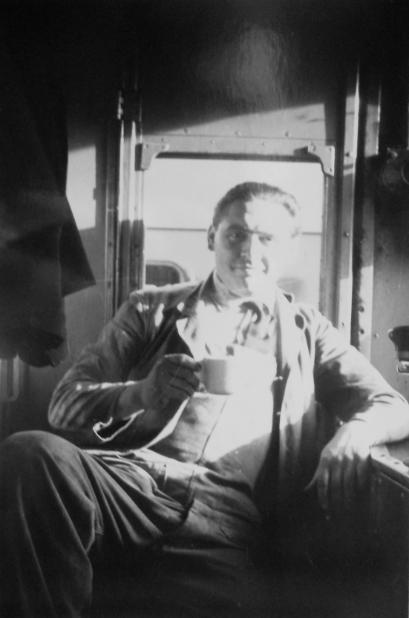
PHIL WIMPORY COLLECTION
Horsham Driver Dick Ford (01.11.1948)
LOCOMOTIVE JOURNAL
AUGUST 1963
PORTSMOUTH (1) BRANCH
Hardly a month goes by without there being some reference in a Branch report to the attendance at Branch meetings. What is the reason for non-attendance? Is it because, having paid their contributions, certain members think they have done all that is expected of them, and that can leave the rest to Branch Officers?
Or is it that they haven’t the sense to come along and take part in intelligent discussions concerning their future livelihood, wages, conditions of service, pensions, etc., etc.?
However, for the loyal ones who attended our June meeting there was a lengthy agenda to interest everyone. Our Secretary, Bro. S. Webb, gave a very real and interesting report on the 1963 A.A.D.
The Drivers who were deprived of a preference move due to the deletion of Clauses 22-26 on 1 July, 1961, were again the main topic for discussion. These Drivers, due to their seniority, were denied a 23b move prior to 1 July, 1961, and after that date, were again denied an 8b move to E.M.U.T.
It was unanimously agreed that the sooner this two year old anomaly was removed the better.
A. WallerBranch Reporter
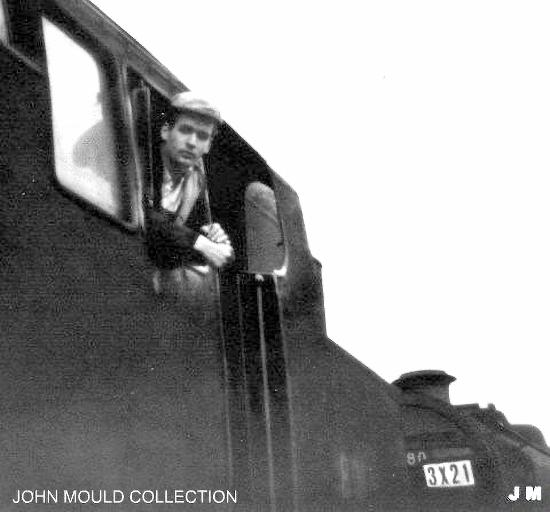
JOHN MOULD COLLECTION
Eastbourne Fireman John Mould
John later become a driver at Ore and Eastbourne depots
The last train to run on the West Quay, Newhaven
Saturday 10th August 1963
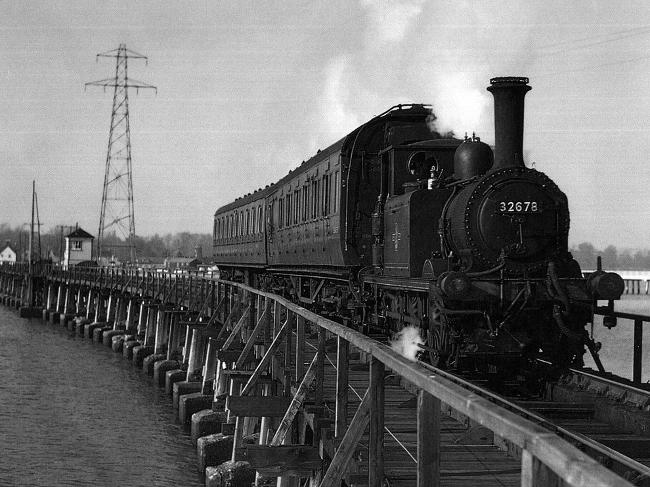
hauled by a Terrier tank engine No.32678,
Driver Maurice Smith and his Fireman Roger Stone.
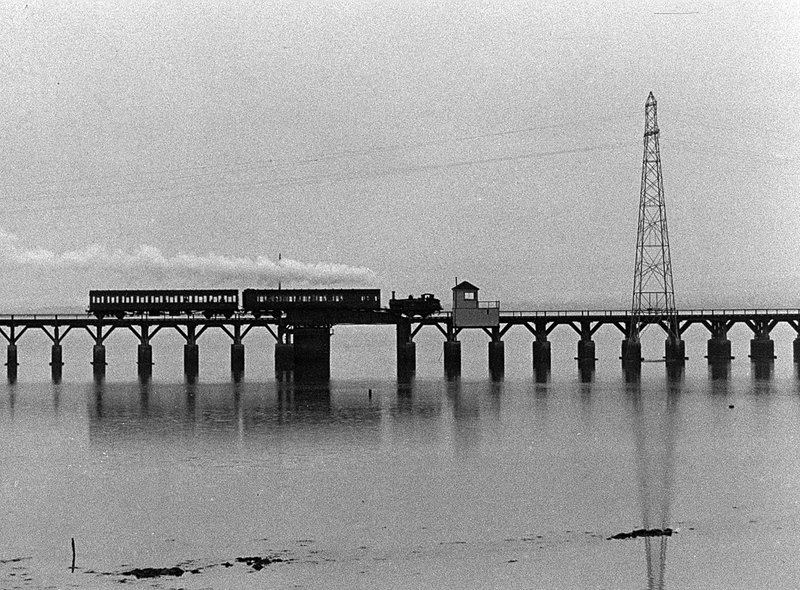
The engine took water beside the Railway Hotel at 07:30 a.m.; the shunter unlocked the gate from the rail connection on to the bridge. Railwaymen stopped the traffic , one controlling the gate at each end (this was not done before the last war, the train only being protected as it crossed the road). The engine run light across the bridge, with the instructions to clear all wagons. First the large warehouse used as a rope works and tarpaulin factory; this had been closed on the 2nd August, and the consequent loss of rail traffic contributed to the decission to close the tramway. The first job was to shunt some empties back into the siding, and then pass them on the adjacent loop to fetch an empty box van and an empty bogie luggage van from the former oil siding (oil traffic had ceased four or five years earlier). Ther train ran past the Sheffield Hotel, where the chairs showed evidence of post war relaying, and then beyond the Hope Inn the track had concrete sleepers, the line having been relaid due to storm damage. In the breakwater siding, material for maintaince of the breakwater was kept under lock and key; this had been the main traffic on the line, shingle etc., not necessarilly from local sources. Here a self propelling crane and an open wagon containing a tank for its water supply were left to make their own way across the bridgea week later - a new diesel crane had been provided for breakwater maintenance. The engine returned with five wagons, and a member of the breakwater staff locked the gate behind it. The engine did not need to go back onto the breakwater, with its old tied tracks; in the past when it did so sometimes when the sea was rough the breaking water might go down the chinmey. The train eventually formed up by the sheet stores comprised eight open wagons, two covered wagons, and the bogie luggage van (the largest load the driver could remember in recent years had been 19 wagons). About 10:30, the single gates at each end of the bridge closed against road traffic, and Maurice Smith and his engine No. 32678 made the last slow journey across, turning by the Railway Hotel into the main sidings.
It was some sixty years since the first Terrier tank made this trip; the driver on this occassion recalled that No. 32678 had been "on station" since 3rd July, instead of the usual weekly change-over, due to the poor state of the boiler of No. 32649, which had been sharing the duty.
Extracted and adapted from
the Newhaven & Seaford
Branch book
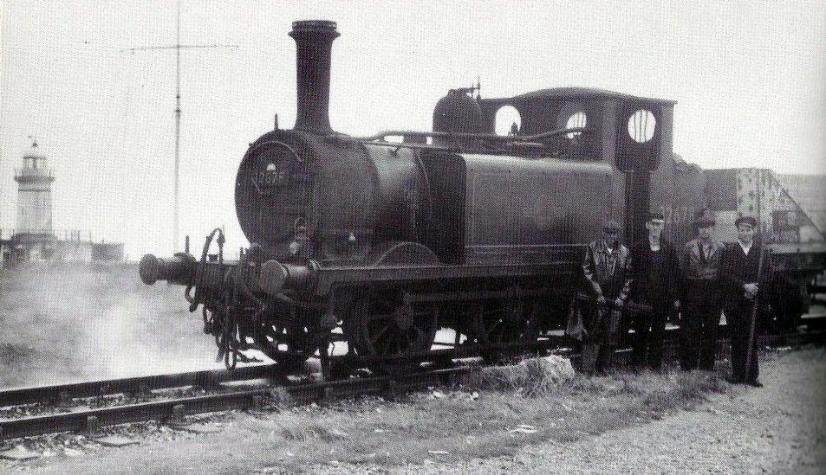
R. Riley Collection
The last train on the West Quay Newhaven line Saturday 10th August 1963
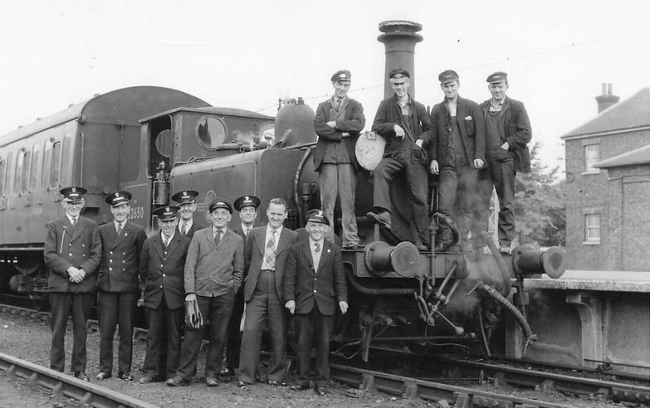
L - R: Harbour employee unknown, Fireman Roger Stone, Driver Maurice Smith (22.03.1916) & Shunter/Flagman Bob Cobden,
(Bob was a Shunter at Newhaven from 1946 until 1963).
Maurice Smith returned to worked after recovering from T.B. and plusery, he was given the job driving the 'Terrier' tanks engine on the West Quay 'Pilot'. The West Quay 'Pilot Turn' included shunting the sidings on the West Quay and taking provisions to the light house keeper at the end of the Breakwater.
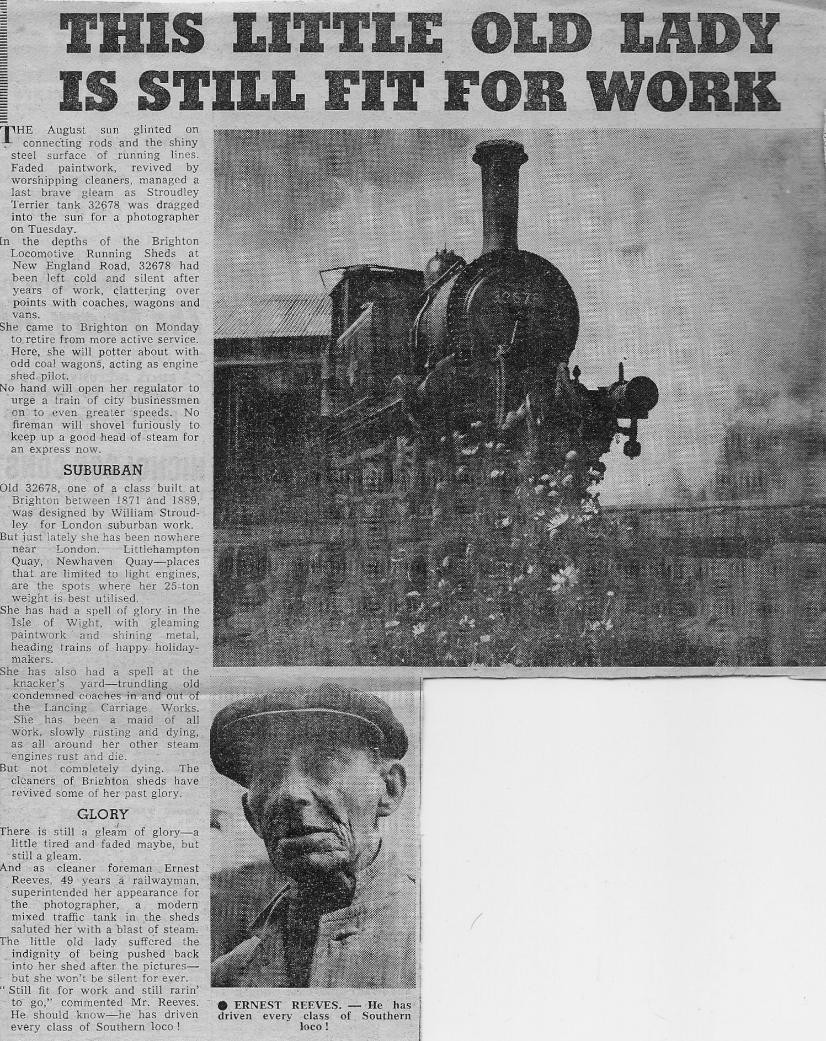
Alan Bartlett Collection
Ernest Reeves, was known as Bert
16.04.1901
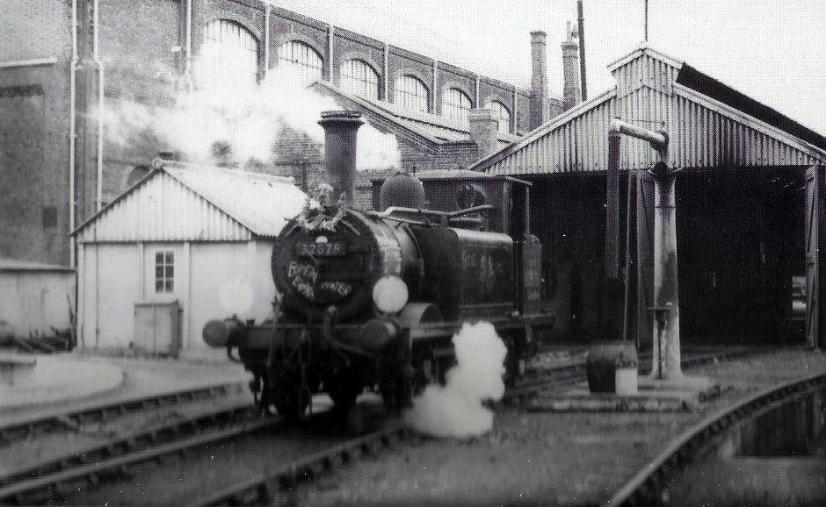
PHOTOGRAPHER UNKNOWN
NEWHAVEN LOCO ON THE LAST DAY
Extracted and adapted from
Newhaven Branch Meeting
Sunday Sept. 8th 1963
The Chairman and Secretary welcomed Bros. R. Turner and E. King.
Regret was express that the Society Diploma had not arrived in time for Bro Ern King who had been Secretary for 15 1/2 years and Chairman for 10 1/2 years.
Bro. King suitably replied and thanked members for the taxi. Appreciation was expressed to Bro Reg Turner, having been active in the Branch, L.D.C. etc.
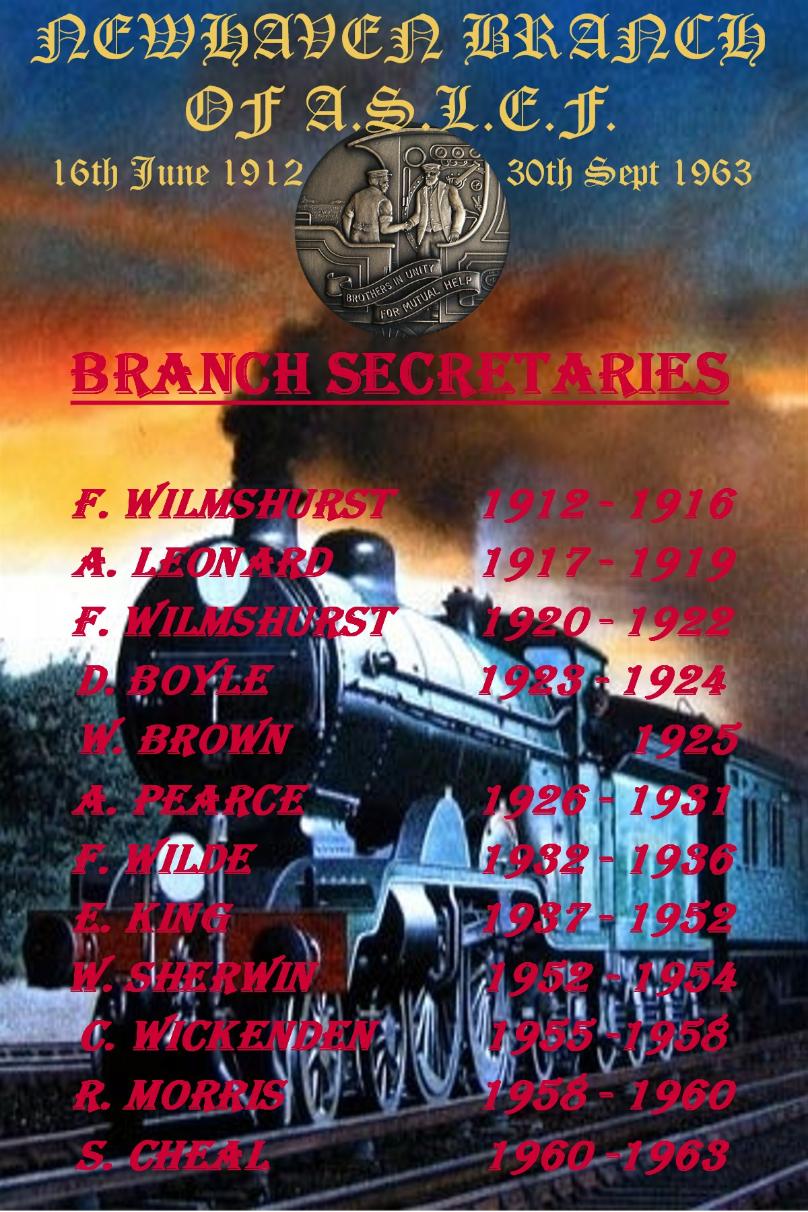
The Chairman assured all present the returns were in order and reminded members this Branch would continue until 30th September, 1963. It was agreed the members transferred to the Branch where the members would be after 30th September. The secretary thanked all who had paid in advance.
Correspondence
Travelling Allowance in Lieu of Lodging.
Letter from Organising Secretary dated 3rd September 1963. Members present express their opinions on. Bro. W.J. Cleaver it was noted no word was included relating to Redundant Drivers and Fireman and men who made accepted Resettlement Payment. Members had not forgotten the last meeting to this Branch by Bro. W.J. Cleaver.
Correspondence on Closure of Newhaven Loco
The Chairman, Bro. Morris explained that the meeting held on Monday 2nd September 1963, present were Newhaven and Brighton L.D.C.'s and Sectional Council Chairman and Secretary, Bros. F. Saunders and E.H. Channing. Arising from this meeting a notice was posted at Newhaven Loco dated 5/9/63.
Moved by Bro. D. Renville and seconded by Bro. J.Nash.
'That having heard the report of our Representatives and having examined closely notice posted 5/9/63. This Newhaven Branch support members claiming the use of the Railway taxi after booking on duty at Newhaven on Monday 9/9/63.'
All the correspondence relating to the P.T.&R.A.the Newhaven Closure file was placed before the members. It was further agreed that another meeting be held before 30th September if necessary. A number of members expressed the opinion they would like to telephone the Secretary with their personal problems, this was agreed.
Moved by Bro. V. Harris and seconded by Bro G. Hilton.
'That if an extra meeting be held, Bro. Channing be invited.' Carried.
Newhaven Branch Fund
The cost for the taxi for Bro.King was 10/-. Moved by Bro. V. Harris and seconded by Bro. C. Evans. 'That any balance after deductions of taxi for Bro. E. King, be taken by Bro. S. Cheal, Secretary, to offset loss on Locomotive Journals.
Any Other Business.
A great surprise for the Secretary, Bro. W. Terrill had collected from the Newhaven members, and Bro. E. King former Branch Secretary and Chairman presented to Bro. S. Cheal a table lamp in the form of a Lighthouse and capstan, the capstan acting as a table cigarette lighter, and for Mrs Cheal a decorative china dressing table make up mirror.
Bro. King paid very kind remarks to Bro. Cheal for the work he had done for Newhaven members.
In reply, Bro. Cheal was lost for words, he had never seen a table lamp like this and one he would treasure it all his life as a reminder of the members of Newhaven Loco. Bro. Cheal also thanked the members on behalf of Mrs Cheal who had done so much to assist him.
The Chairman reminded member of the time and regretted that time would not allow for refreshments which had been planned. In wishing all members the best of luck in the future at other depots or in outside industry he closed the meeting at 1.10 p.m.
LOCOMOTIVE JOURNAL
NOVEMBER 1963
VIEWPOINT
WE MUSTN'T SIT BACK
"This conference reiterates its determined opposition to the Government's transport policies which inevitably mean unplanned and uncontrolled transport in this country and a perpetuation of the present chaotic conditions in the transport industry.
It declares that the Beeching Report, which attempts to direct the future development of railways solely on a basis of profit consideration and to deal with railways in isolation from other forms of transport, does not meet the urgent need of the nation for an efficient transport system.
Conference recognises that the social and industrial needs by a transport industry based on short term profit considerations nor the segregating of the industry into independently controlled sections.
It is aware if the vital role an integrated transport system must play in developing a faster rate of industrial expansion, raising the efficiency of our manufacturing and export industries, ensuring effective town planning, arresting depopulation f some regions of the country, eliminating unemployment and serving the social needs of the community in general.
Conference demands, therefore, that the Government shall defer any action in regards to closures based on the Beeching proposals until a survey has been held into all forms of inland transport, and coastwise trading by British ships (including docks facilities) ands a national plan drawn up to enable transport to render full service to the nation."
The foregoing is the text of the transport policy resolution unanimously adopted at the 1963 Annual Conference of the Labour Party held in Scarborough last month, The attitude of the Party's National Executive was stated by Mr. Ray Gunter, M.P. (President. T.S.S.A.), who wound up the Conference debate o this item. A Labour Government, he said, should take into consideration the following points in their approach to the matter: Until a full survey of transport as a whole has been carried out, no major decisions in rail transport should be taken; consultations with the National Economic Development Council should be held before any programme of closures is drawn up; there must be an examination of new developments in transport to ascertain how they fit into an overall plan, which must in turn be complementary o policies of regional and town development; and the public sector of road transport must be considerably enlarges.
This was the last Labour Party Conference to be held before the next General Election takes place on a date to be determined by the Tory leaders. When they do decide to go to the country, what will be the outcome? At the time of writing Tory stock is certainly low, and people both in and outside of our Movement are talking and writing as though Labour victory next time is an automatic certainly.
This attitude should be avioded at all costs. The Tories still believe that can "pull something out" sufficient to get them by when the time comes, and they will certainly neglect no mean to do so.
A victory for Labour must be achieved by the unsparing efforts of its supporters, taking nothing for granted. And we must not be content with denouncing the Government; we must also propagate unceasingly the positive polices of Labour from every aspect, not least, in our own field of transport.
LOCOMOTIVE JOURNAL
NOVEMBER 1963
PORTSMOUTH (1) BRANCH
On Saturday 24 August, nine of our members were given a grand farewell at Retirement Presentation at the Railway Rifle Club, Portsmouth. The recipients all of whom retired during the past year, were members of Portsmouth (1) and (2) Branches.
They were Bros. H. Laws, C. Davey, G. Wickerson, E. Golding, S. Few, F. Lewington, J. Leeson and H. Palmer. Bro. C. Neal unfortunately was unable to attend, but his railway service added to that of the other retired members made a grand total of 440 years’ Footplate service; surely a record equalled by few outside industries.
Mr. S. Downes, District Motive Power Officer, made the presentation to our members and their wives before a large gathering, which included a large number of retired members. Bro. Percy Hocking (ex-E.C. Member) of Eastleigh made a further presentation of a copy of The Lighted Flame to Bro. G. Wickerson for his past service in the sphere of branch and L.D.C. work.
Thanks were given to our wide-awake young Presentation Committee for the wonderful send-off.
I know that many members will be glad to hear that our previous Branch Secretary, Bro Jack Elston, is in fine fettle after three years of retirement, and never misses a branch meeting. Surely this is something for the NONS and CABIN LAWYERS to think over!
A. Waller
The Havant to Hayling Island branch line closed
on the evening of Saturday 2nd November, 1963
The last service on this day was worked
by Fratton Driver George McAskill and his fireman Dave Pallett
JOE PANNETT COLLECTION
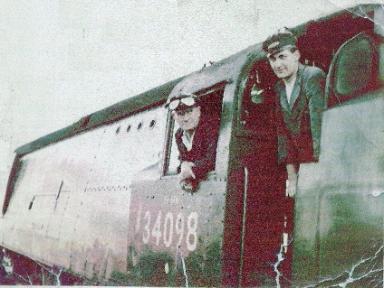
Brighton Driver Vic Fewtrell (05.10.1914) & Fireman Joe Pannett
LOCOMOTIVE JOURNAL
NOVEMBER 1963
AS THE PASSENGER SEES IT
BY E.S. WATERHOUSE
A LINE IN SUSSEX
With the remorselessness of Judge Jeffrey’s “Bloody Assize” the branch lines are being
marked down and it is sad to hear that the Horsham - Brighton branch is among them. it runs
through the heart of West Sussex, through meadows and the Downs, to join the Brighton - Portsmouth line by the river at Shoreham, where, as at Brighton it connects with the whole South Coast and at Horsham with Waterloo, London Bridge and Victoria.
There are 17 trains each way on week-days and 11 on Sundays. most trains make 11stops and the timing is just about an hour. This does not sound like a direct line which is past revival.
For 102 years it has served a useful purpose. When I first knew it, the little L.B. & S.C.tanks
of the D1 type did much of the work, and later the 0-6-2 class E4. After the Southern Railway came into being the Drummond M7 type took over and were seen till the last few years, when the B.R. “80” type came, Tank engines have been predominant on the line from the beginning. I was travelling on this line lately and food that a number of ex-L.M.S. 2-6-2 type tanks of Ivan’s design of 1946 were at work there. They have 5ft. 7 drivers, 161/2 by 24
cylinders, 200lb. steam pressure, taper boilers, Walschaerts gear and P.V., with T.E. of
18,510lb. and seem well liked. The trains are light, three bogies, and keep excellent time.
Two of our Horsham members, Bros. Hills and Tanner worked my train to Shoreham with
41312, and two of our Brighton members, Bros. Colley and Pannett, brought me back with
41327. In all my travels this years this is only the second time when I have been steam-
hauled, more’s the pity! To close lines without proper and equally convenient other transport
is to treat railways like multiple stores - pay or close. Instead of trowing passengers and
freight on to roads which, the experts forecast, will be trying to carry 13 million vehicles by
1970, sanity surely calls for the Labour Party’s proposal to consider road and rail policy
together. The Tories, the Big Businessmen’s party, might ask themselves which is worse, the
deficit lost on the national necessity of railway transport or millions gone down the drain in
“deterrents” that won’t function and are quietly scrapped like Blue Streak. But, as John
Bright said once, “The Tories are always a stupid party"
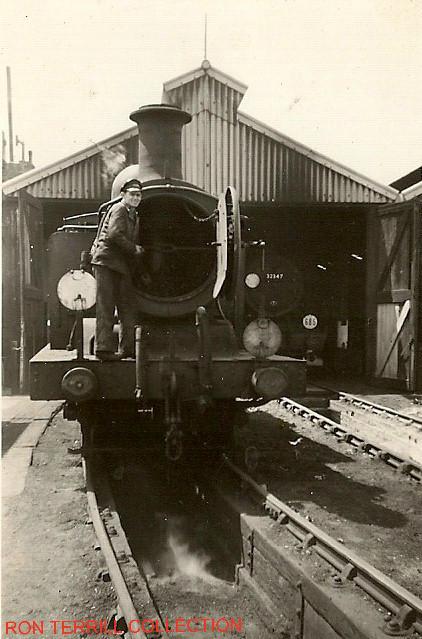
Newhaven Driver Bill Terrill
William Charles Terrill entered the footplate grade
at Newhaven on the 23rd January, 1920.
LITTLEHAMPTON18th NOVEMBER 1963
EXTRACTED & ADAPTED FROM
BLOOD & CUSTARD WEBSITE
On the 18th November, 1963, the 12.55 p.m. Littlehampton departed platform 4 and derailed on the catch points.
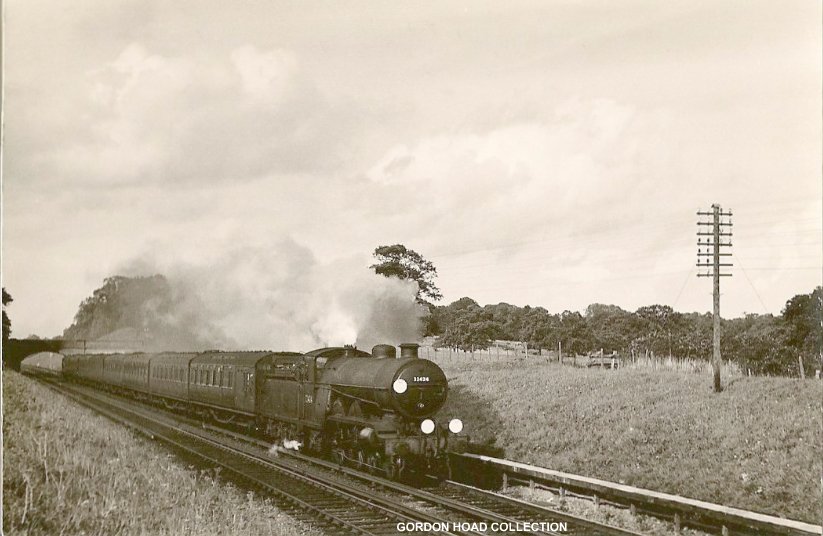
LOCOMOTIVE JOURNAL
DECEMBER 1963
NEWHAVEN
PAGE 236
This will be the last Branch Report, as on 9 September Newhaven Loco was closed and all staff made redundant. Those who are trying to adjust themselves to their new surroundings wish those who have left the railway every success.
When it was first learned we would close, the branch decided to work to a system which proved to very satisfactory, so with the assistance of the Society pamphlet issued May, 1963, to all members on promotion, transfer, redundancy and resettlement arrangements, the branch was turned into a type of Improvement Class. Every assistance was given by Bro. E.H. Channing, Southern Sectional Council Secretary, who answered all queries in writing.
Why Newhaven Loco. had to close is still a mystery, with the Newhaven – Dieppe Car Ferry Service opening in 1964 and the increasing popularity of the Victoria - Newhaven Boat Train Service. The representatives were told a £4,000 saving would be made each year, but the management would not state how the figure was arrived at.
So much could be said, but may I conclude by thanking Newhaven redundant drivers and firemen for the wonderful presentation made to my wife and myself. It was a pleasure to serve you.
Stafford Cheal,
Branch Secretary
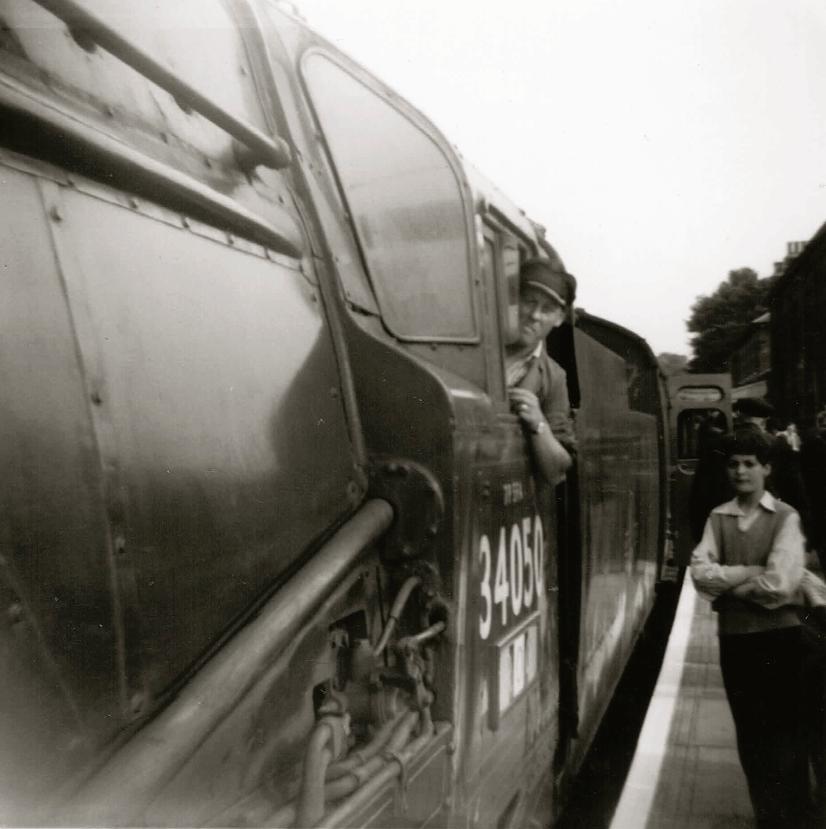
Robin Baldock Collection
BRIGHTON3rd DECEMBER 1963
EXTRACTED & ADAPTED FROM BLOOD & CUSTARD WEBSITE
On the 3rd December, 1963, at 10.30 a.m. four car Electric Multiple Unit (2x 2 cars) Ran Way from the West Sidings and heavily collided with the buffer stops.

LOCOMOTIVE JOURNAL
DECEMBER 1963
PORTSMOUTH (1) BRANCH
Hardly a month goes by without there being some reference in a Branch report to the attendance at Branch meetings. What is the reason for non-attendance? Is it because, having paid their contributions, certain members think they have done all that is expected of them, and that can leave the rest to Branch Officers?
Or is it that they haven’t the sense to come along and take part in intelligent discussions concerning their future livelihood, wages, conditions of service, pensions, etc., etc.?
However, for the loyal ones who attended our June meeting there was a lengthy agenda to interest everyone. Our Secretary, Bro. S. Webb, gave a very real and interesting report on the 1963 A.A.D.
The Drivers who were deprived of a preference move due to the deletion of Clauses 22-26 on 1 July, 1961, were again the main topic for discussion. These Drivers, due to their seniority, were denied a 23b move prior to 1 July, 1961, and after that date, were again denied an 8b move to E.M.U.T.
It was unanimously agreed that the sooner this two year old anomaly was removed the better.
A. WallerBranch Reporter
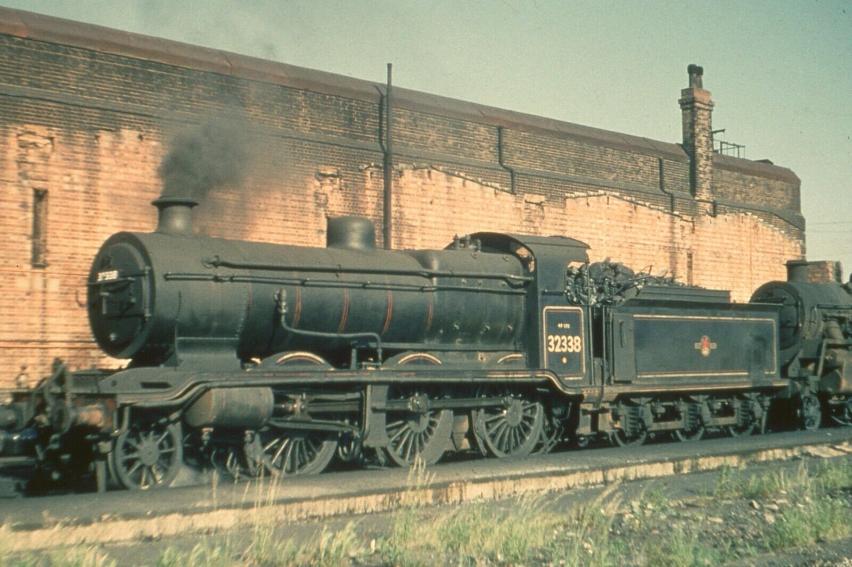
VICTORIA8th DECEMBER 1963
EXTRACTED & ADAPTED FROM BLOOD & CUSTARD WEBSITE
On the 8th December, 1963, the 1.15 p.m. London Bridge to Victoria collided with the buffer stops on Platform 6 at Victoria.
Railway accident on British Railways
Southern Region
Central Division
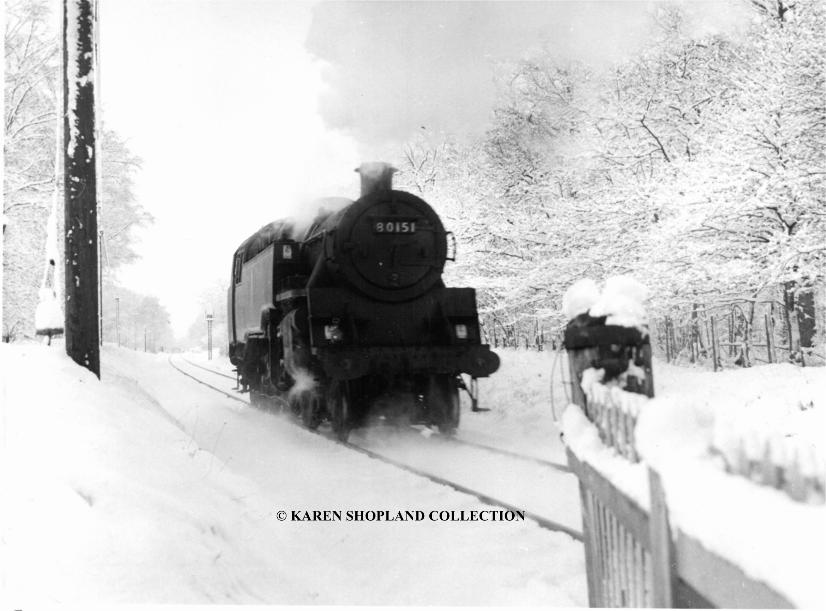
KAREN SHOPLAND COLLECTION
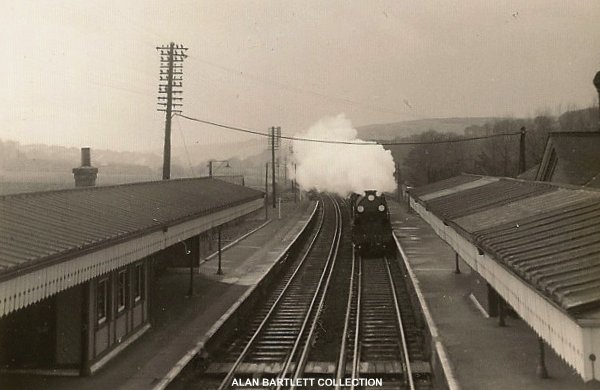
Standard Tank 80151 running Light Engine returning back to Three Bridges Loco
approaching Compasses Crossing