THE END OF THE MOTORMEN GRADE
The Motorman grade of driver was abolished in 1961 and those Motorman where protected
under the L211 arrangements which enable them only to work electric train duties unless they decided to give up their L211 status.
LOCOMOTIVE JOURNAL
FEBRUARY 1961
LITTLEHAMPTON
PAGE 57
As the year 1960 draws to a close it gives one cause for reflection on the past year’s work of the branch. It as been a year with which the members can be justly pleased, as we have achieved solidarity second to none, and satisfaction and understanding from the management on many of our problems.
The passing of the year, however has and meaning for this branch being to the retirement from the chair Bro. Frank Miller, who shortly retire from railway service. Bro. Frank at the time of writing, is unfortunately in hospital. His loyal a dedicated service to this branch in years even when not in good health himself, has been a shinning example to us.
Congratulations to Bro. D.K. Pullen for his lively and humorous article in December Journal. Whilst enjoying his humour in this matter, it is to hoped that seriousness of underlying implications is not overlooked.
G.J. Knight
Branch Reporter
LOCOMOTIVE JOURNAL
FEBRUARY 1961
HORSHAM
PAGE 58
This branch would like to thank branches who helped us to attain the wonderful figure of £231. 9s 6d for Bro. F. Bristow and his children, it just goes to prove what can be done by fellow-workers of the A.S.L.E.&F.
So if you are a non, join A.S.LE.&F. NOW, you may be the next one need help. Bro. Bristow has written follows:
“Thank you all for your most wonderful and overwhelming kindness and generosity to my children and myself. It was only the knowledge of having so many kind friends around during those few days immediately after my dear wife’s death that stopped me from going to piece completely and now you have all helped again by giving me the courage and strength to face the future again. I shall always remember your kindness to my family and myself with humbleness and pride. Thank you all from the very bottom of my heart.”
W. Hutchings
Branch Secretary
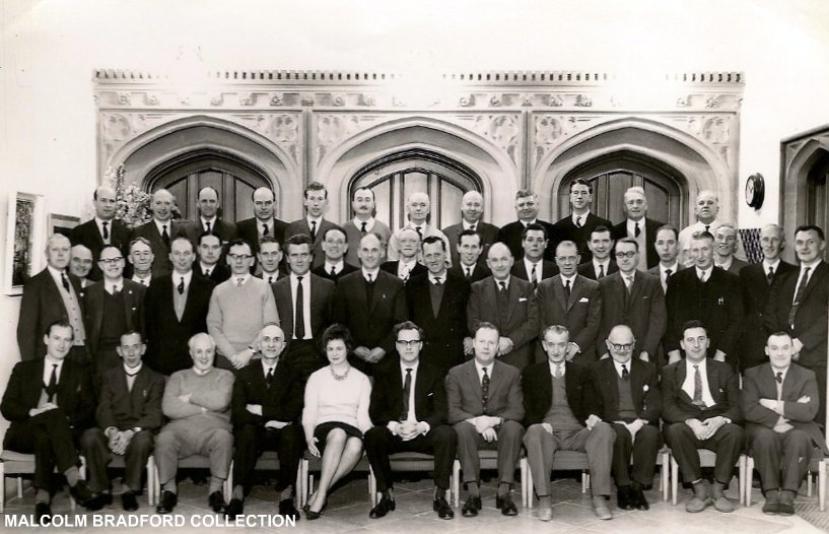
ASLEF School c1961
Peter Bradford Brighton No.1 Branch Delegate (Branch Secretary) standing 2nd row,
5th from the left Albert Routledge, Brighton No.2 Branch Delegate
is on the bottom row far right
but continued as a steam depot until 14th June 1964
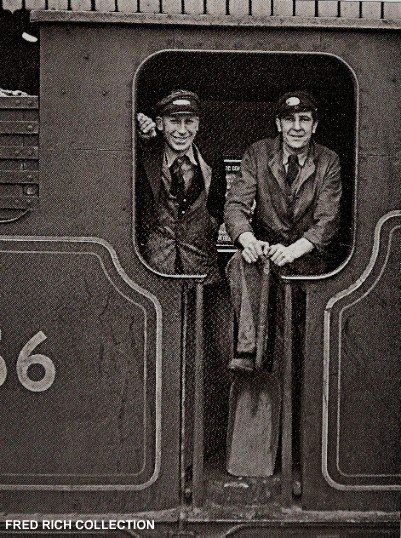
T.W.W. Driver Fred Diplock (left) & Fireman Dennis Ward
LOCOMOTIVE JOURNAL
JUNE 1961
TUNBRIDGE WELLS
PAGE 172
It is with deep regret that I have to report the death of Brother F.G. Robinson who passed away on May 9. Bro. Robinson had recently handed over to me as Branch Secretary after holding the post for 27 years. He had also served on the Town Council for a number of years and was a good friend to all in need.
In February of this year he was selected for the high honour of Mayor-Elect of Tunbridge Wells, to take office on May 21st, but due to his recent illness was advised by his doctor to decline.
We at Tunbridge Wells have lost a true friend and workmate who would always readily give advice in personal and Trade Union matters, and his loss to this depot will never be replaces. Our deepest sympathy goes to his widow, son and daughter in their sudden and great loss.
B. Gower,
Branch Secretary
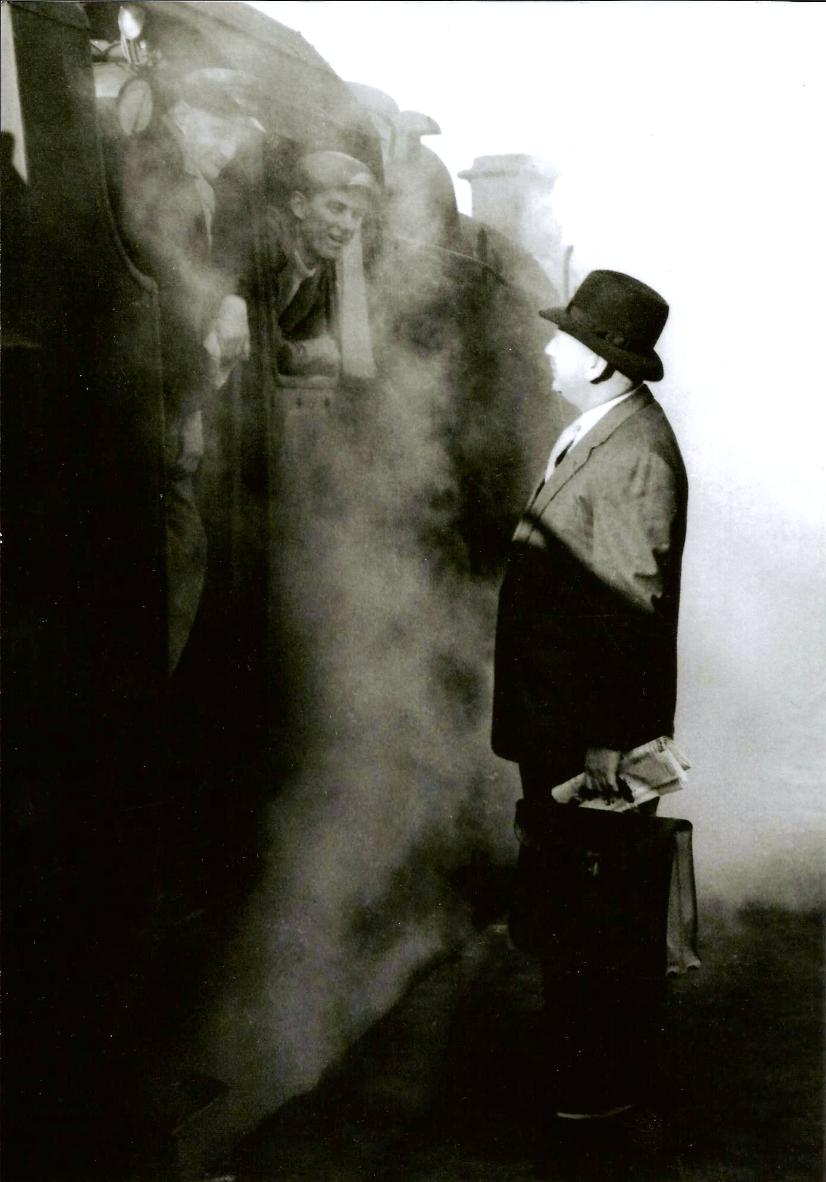
KEN CHAPMAN COLLECTION
Left - Right Driver F. Tribute (15.10.1919) and Fireman Ken Chapman
Dr. Beeching’s first day at B.R. joint the train at East Grinstead, asked by Dr. Beeching, how is the coal, Fireman Chapman replied “CRAP”.
'Please note steam gauge smack on’
LONDON BRIDGE21st JUNE 1961
EXTRACTED & ADAPTED FROM
BLOOD & CUSTARD WEBSITE
On the 21st June, 1961, the 6.24 p.m. Epsom Down to London Bridge, arriving on platform 18, collided with buffer stops
HORSHAM2nd JULY 1961
EXTRACTED & ADAPTED FROM
BLOOD & CUSTARD WEBSITE
On the 2nd July, 1961, two Electric Multiple Unit Trains were involved in a converging collision.

JOHN DEBENHAM COLLECTION
Three Bridges Driver John 'Chic' Debenham
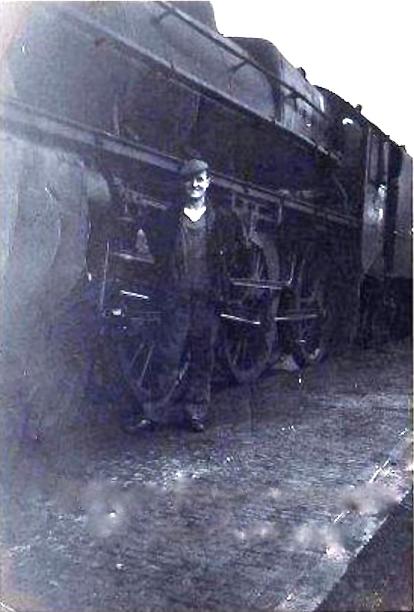
Chic is seen leaning against the engine in Three Bridges loco
Chic started his footplate career at Three Bridges on the 27.07.1953.
Chic later transferred to Brighton M.T. as a redundant driver in April 1969 when Three Bridges M.T. was closed
LOCOMOTIVE JOURNAL
AUGUST 1961
EASTBOURNE
PAGE 226
Branch meeting remain at the same level of attendance and, being affected by the Dual Link alteration in the P.T.R.A., much discussion arises, the Pool being a point we think we should watch closely. Some of the facilities are not up to standard but it seems we “flog a dead horse” where Messrooms are concerned.
Saturday, June 10, gave us another of our social evenings with presentations to Drivers C. Fears and A. Divall, both having served the Branch well in official capacities as Secretary and Chairman respectively, and service to the Organisation is always respected.
Many turned up, both old and young, and, in addition to their parting gift, copies of The Lighted Flame were presented to both. Past and present Shed Masters were amongst us.
Thanks to the Committee – may their good work continue!Branch Report
BRIGHTON19th SEPTEMBER 1961
EXTRACTED & ADAPTED FROM
BLOOD & CUSTARD WEBSITE
On the 19th September, 1961, the 11.28 a.m. Victoria to Brighton was involved with a converging collision with the 12.30 Empty Coach Stock from Lover’s Walk to Brighton
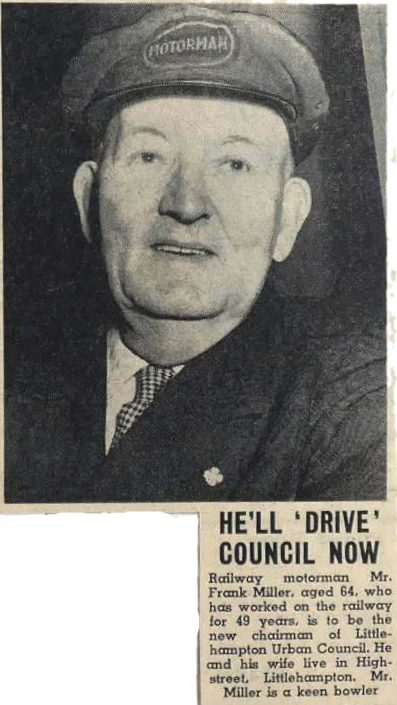
LITTLEHAMPTON MOTORMAN
FRANK MILLER
Seniority 17th June 1912
LOCOMOTIVE JOURNAL
SEPTEMBER 1961
Sir, Where Toram Beg carried out his investigations, only he knows. What I know is that he didn't carry them out at such termini as Charing Cross, Victoria or London Bridge, because I am certain that had he done so, he would be altering his tune.
Has he ever tried to push his way through a milling mass of passengers from two trains alighting on the same platform?
Has he tried to walk alongside the train (8-car) and to negotiate 60 or 70 doors open in his path and dodge the door suddenly opened in one's face? If he had he would have known this tends to destroy the two minutes walking time that he so plausibly states.
Surely work study doesn't tolerate the ignoring of the Rule Book and ElectricTrain Instructions, such as making a brake test, or testing the dead man; these are rules to be practised every time one changes ends or takes over a new train. Then there is making up a stencil for the headcode and replacing in headcode frame. Then the tail lamp, and the brief but important conversation with the driver one relieves. regarding train defects. etc.All these things add to the time.
The statement by D. K. Pullen, experienced as a practical Train Driver (Electrics) is one that the fraternity of Southern Region men will agree with wholeheartedly.
J. Whiley,
Assistant Secretary, London Bridge
LOCOMOTIVE JOURNAL
SEPTEMBER 1961
LONDON BRIDGE
IN spite of the holiday season our August meetings proved both interesting and lively gave a special welcome to Bros. Monty Renshaw and Frank Saunders, Sectional Council Members. Monty was present to give a report on Sectional Council and we were so pleased to see Frank back again after his bad illness.
Members were pleased to hear the results of the ballots in which Don Pullen has again been chosen to be our E.C. representative, and our Chairman, H. Bagilhole, elected as Delegate to the 1961 Labour Party Conference.
In response t o the circular dealing with the 10 per cent Wage Increase application, the E.C. was unanimously urged to press our claim, despite Selwyn Lloyd's statement for a standstill on wage increases. Monty's report on the enlightening and appreciated, drawing seen questioning from the floor.
The report on the new L.D.C. set-up drew the exact opposite in the shape of heated criticism, our members leaving our Sectional Council members with no doubts that we consider the new Depot representation an unnecessary and retro-grade step against effective trade union organisation. Protests are being submitted.
Bro. Williams will be giving his A.A.D. Report next month. Come along and get acquainted with official policy, Brothers !
H. Bagilhole
Chairman
LOCOMOTIVE JOURNAL
SEPTEMBER 1961
KEEPING IN TOUCH
with Don Pullen
ONE of the most remarkable things about the infamous Promotion, Transfer and Redundancy Arrangements is the fact that the slightest alteration always designed cautiously and with the best possible motives immediately promotes chaos on top of utter confusion.
Why on earth the briefest possible reference to staff representation (in the recent document tying-up the deletion of Clauses 22 to 26) should prompt everyone to believe there had been wholesale changes in the Machinery of Negotiation is quite beyond me.
Appendix 1 of this Machinery says as clearly as it is possible to say, what shall govern the setting up of L.D.C.'s. the manner in which representatives
shall be elected, the f u n c t i o n s of such committees, etc. There has positively been no change in this arrangement. All that has happened is that the grade of Motorman has gone out, and that we are no longer lumbered with dual and electric links.
TURMOIL
Staff have always had the right to group under one Shed Master to form a full L.D.C. if they so desire. This arrangement never applied to Motormen, but now that we have no such grade everything should be straight-forward. No longer any need of special Regional concessions from Management to cover peculiar circumstances. One would have thought the change would have been most welcome
Yet on the Southern Region at this point in time things are in a real turmoil. We are threatened with the carving-up of a system of staff representation which has proved its worth among electric train drivers for a longish time. It is difficult to believe that management really want to so divide the staff that more than double the number of representatives will be needed. Imagine the position at times of roster scrutinies, etc., when there will be more men at the roster offices than out on the trains! Seems as though some hurried re-thinking is now necessary in high places....
While on the subject, let's say a word about the passing of the dual links. No tears, no regrets, no ashes and sackcloth among the staff on the Southern. All we ask is that these offending links shall be sunk completely and without trace.
If anyone should harbour the notion that dual links can still survive in some other garb, ;et them have another think. Dunghills under any other name still offend the nostrils. Those of us who sat through the years of negotiation on the abolition of the dual system will take most unkindly to any suggestion that it should be perpetuated.
The designation of Supply Depots in cases where electric depots are so small that it is unreasonable to claim that they should be self-contained is one thing; for anyone to attempt to argue at this late stage the wholesale establishment of Supply Depots merely a resurrect dual links is quite unreasonable and unrealistic.
ABOARD FOR A RIDE INTO THE PAST
extracted from the Evening Argus 09th October 1961
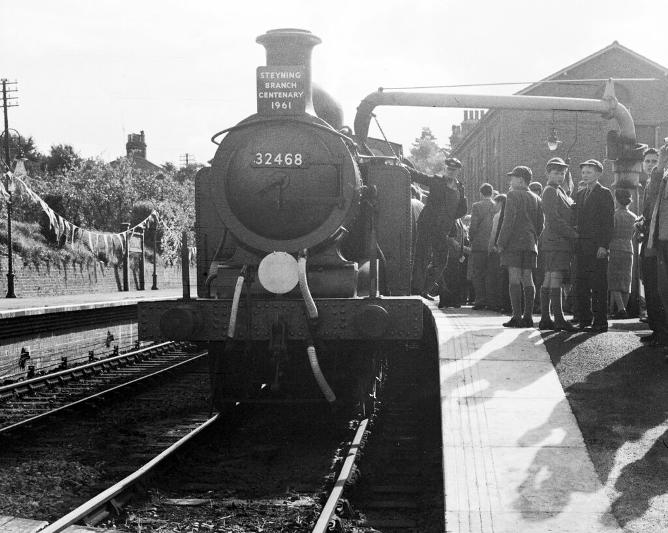
The big brass hand bell which was once used to herald the arrival of the "Puffing Billies" rang out again at Steyning on Saturday.
Stationmaster Saturday Tony Carter borrowed the bell from a to ring in the 1.30 p.m. from Brighton for the train first time since 1925.
Reason for turning back the pages history was the centenary celebrations of the Steyning line, which was opened in the summer of 1861 and later extended by stages to Horsham.
It was a big day: for the kids who want to be engine drivers. They piled into the score at
the carriages by the score at Brighton yelling with excitement as yelling with the ex London, Brighton and South Coast locomotive, first operated under the name of Midhurst in 1896, pulled away.
Steyning is one of the few old lines still operating an hourly service, although it was threatened with closure in 1951 when branch lines came under economic review.
Gay bunting was flapping all over the station when driver Bert Griggs (above right) brought the train to a noisy the train to a noisy halt and filled up with water before moving on down the line.
Out scrambled the kids, dragging their breathless mums and dads over to disused line where driver Albert Newman (right) gave them a ride on a "Terriers Close" engine
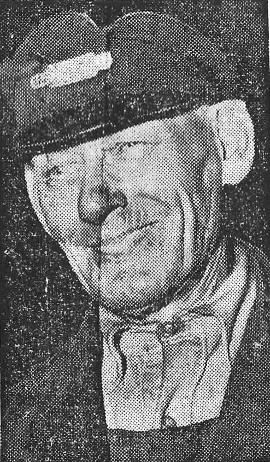
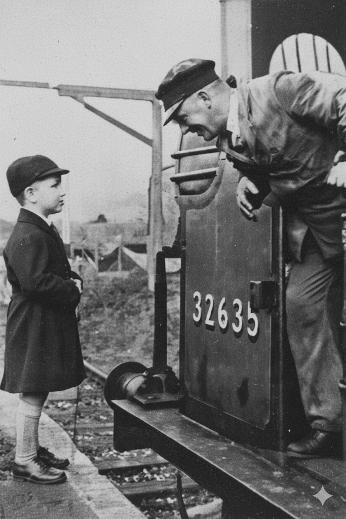
Bert Griggs (seniority 12.01.1920) & Albert Newman
LOCOMOTIVE JOURNAL
NOVEMBER 1961
PUTTING BACK THE CLOCK
Thursday, October 12, 1961, will go down to history as a notable date in the long record of railway labour negations.
On that date at the Railway Staff Joint Council and British Transport Commission not only rejected our pay claim, but did so on the grounds which in part can only be described as sensational. In addition to advancing arguments on familiar lines, they also made it perfectly plain that they did not intend to be bound, in these or in future negotiations, either in detail or in principle, to the relativity with outside industry laid down by the Railway Pay Committee of Inquiry so far as wage rates are concerned. As the "Daily Telegraph" bluntly put it the following morning: " The British Transport Commission has abandoned the principle of comparability, embodied in last year's Guillebuad report on railwaymen's pay."
For many long years this Society has consistently laboured to restore to locomotiqemen's standard pay rates a fair and reasonable with other rates aid both within and outside of the railway industry. Over and over again since 1947, in negotiation within the industry, at Courts of Inquiry, and at a whole series of hearings by the Railway Staff National Tribunal, we have sought to restore our member grades to their rightful position in the general wages pattern of British Industry as a whole. The effect of the Guillebuad Committee report of 2nd March, 1960, whatever its shortcomings, was at least to vindicate in principle the contention which we had pressed for so long a period of time,
But now that is to say, at the tie of writing these notes a position has been reached in which the Commission do not merely refuse out reasonable claim, but, lo and behold, seek into the bargain to throw overboard a vital principle: to put back the clock; to take away something which had already been established and achieved.
It would be folly to minimise the gravity of such a situation if allowed to persist. We trust that not only the Commission but the Government also will give it the most serious consideration with a view to second thoughts because in an affair of this kind the whole basis of the relations between management and staff is involved.
Regarding our two further claims, seeking certain amendments in detail to the post Guillebaud arrangements, viz., for the abolition of classification of Drivers, and for readjustment of the Fireman's rate in relation to that of the Guard these were also declined by the B.T.C. In so doing, surprisingly enough, they cited the Guillebuad Report as supporting, in their view, the negative reply.
These notes can fittingly be closed by quoting from the concluding section of the circular which on behalf of the Executive Committee was issued to our branches following the refusal of our claims at R.S.J.C. level:-
"We are under no illusion and desire members to be perfectly clear with regards to the arduous nature of the talks before us. In discharging that task we confidently count on the loyally of the membership. We would direct attention to the very important part which can be played by our branches in making a special onslaught upon non-unionism wherever it exists, so as to ensure that the hand of the 'Associated' is at maximum strength in the critical time ahead. In this respect we rely with confidence upon your hearty co-operation."
LOCOMOTIVE JOURNAL
NOVEMBER 1961
PORTMOUTH (1)
At the September branch meeting we had a very memorable evening, being honoured by a visit from the General Secretary and the President of the E.C., who were in Portsmouth for the Trades Union Congress. The attendance was not worthy of the occasion, but I am sure that those members who gave up these couple of hours were more than pleased.
During his address, Bro. Evans wished a long and happy retirement to Bro. A. ("Jack ") Elston, who recently retired after 17 years as Branch Secretary.
We had a first-hand report from Bro. J. Simons on items that have the immediate attention of the E.C.. and we as a branch know that the future of our "Associated" is in good hands.
The branch has had its share of visitors during the past few weeks, namely. Bros. D. Pullen and W. Cleaver, and I am glad to say that although the dispute which occasioned these visits was of a very serious nature, it was resolved with great satisfaction to our members.
Don't forget to keep the "nons" in mind.
Branch Reporter
LOCOMOTIVE JOURNAL
NOVEMBER 1961
LONDON BRIDGE
At our September meetings, members welcomed "home" a former member of our Branch ("Billy") Williams, who attended to give his report on the 1961 A.A.D. With branch business kept to a minimum. Bill had the floor on each occasion for over two hours and treated us to a very lively and interesting report.
His quick-fire references to many details was evidence of a job well done at Conference, a fact acknowledge with acclamation in endorsing the votes of thanks.
Another good evening, well spent by the supporters of an active Branch.
On a sadder note, members will join with us in our genuine sympathy for Bro. Jim Philpot of Addiscombe in the sudden death of his wife. A tragic blow to such a young family.
H. Bagilhole
Chairman
LOCOMOTIVE JOURNAL
DECEMBER 1961
THAT TRANSPORT BILL
The Government Bill for the reorganisation of the nationalised transport undertakings, published last month, follows in the main the proposals outlined a year ago in the White Paper.
The British Transport Commission is to disappear. Nationalised transport is to be run (with a greatly increased amount of commercial freedom) by separate Boards, Controlling respectively (1) British Railways, (2) London Transport, (3) British Transport Docks, (4) Inland Waterways; and a Holding Company covering commercial activities such as road freight, shipping services, road haulage, bus operation, and travel agencies.
The proposal in the Bill for hotels varies form that put forward in the White Paper; insisted of going under the Holding Company, the hotel property of the B.T.C. is to be taken over by a hotel company of which the shares will be held by the Railways Board.
The Bill requires the Railway Boards "to provide railway service in Great Britain and, in connection with provision of railway services, to provide such other services and facilities as appear to the Board to expedient......" It is proposed that the Board shall appoint (with the approval of the Minister of Transport) the members of six Regional Boards which are to set up under the Bill. The Regional Boards will be concerned with operating and management duties delegated to them by the central Board.
So far as labour negotiations are concerned, it is laid down (clause 70) that the Railway Board (and the other three Boards) must, "except as they are satisfied that adequate machinery exists," seek consultation with the appropriate organisations with a view to establishing and maintaining agreed machinery of negotiation.
Specially noteworthy proposals are for the removal of the obligation on the railways and on the inland waterways to act as "common carriers"; for the railways to have freedom (outside the London Passenger Transport Area) to price fares and rates; and for permission to the railways to develop the land they own.
Important also are the intentions with respect to financial reorganisation. The amount of loss to be written off, given in the White Paper as £400 millions to the end of 1959, is now increased to £475 millions to the end of 1962. (Owing to depreciation of assets the the further figure of £800 millions which the White Paper stated would be put into suspense is now anticipated o have fallen to £650 - £700 millions.)
During the five years' period after vesting date the Minister is to have the power to provide aid from the Exchequer up to the limit of £450 millions for the Railways Board to meet revenue losses.
Such is the brief outline of the main proposals of the new Bill, a Bill which, although it begs the fundamental question, has certain features in its favour. We believe that the only true solution is that propounded by the Labour Movement the integration under public ownership of all forms of transport. The best that can be said about this Bill is that, from its authors' own angle at least, it makes a more realistic approach to the economic morass in which the industry has floundered for so long.
Parliamentary debate on the measure can serve a useful purpose if it keeps to the fore the important issue of how far railway operation should be governed by commercial considerations and, on the other hand, the extent to which it should be considered as a social service.
----------
FORTY TWO HOUR WEEK
Since my notes were written for last month's "Journal," a Head Office circular (No.94/1961) has been issued to branches, giving further information about the highly regrettable and continuing delay in the implementation of the 42 hour week. That circular made our membership aware that this matter has now been referred by the Executive Committee to the Railway Staff National Tribunal the ultimate stage in the Machinery of Negotiation. An early meeting of the Tribunal to hear our submissions is anticipated.
As long ago as last April the B.T.C. indicated at the Railway National Tribunal Council a qualified acceptance of the principle of a 42 hour week for wages staff qualified, because they insisted on a joint Working Partying set up by the R.S.N.C. to examine how the shorter working week, if conceded, should be applied so as to ensure its efficiency and economic application.
In the deliberations of the Working Party, renewed difficulty ("difficulty" is a mild way of putting it) has been met with. Our policy at the successive meetings which have been held has been designed to secure the application of the principle by means of an additional Rest Day per month.
The B.T.C. on the other hand, stating that there must be "flexibility" in regards to rostering, have insisted that at a substantial percentage of depots the principle should be applied on the basis of eleven terms of 7 hours 38 minutes per fortnight.
For our own part we have maintained our attitude, we feel the adoption of our policy would ensure the most effective provision of increased leisure, which is the whole objective in shortening the working week.
And so "failure to agree" is the result as far as R.S.N.C. is concerned hence the reference of the Tribunal. Obviously one can make no prediction as to what the Tribunal will be. What can be said is that in our advocacy before that body we shall do our utmost, as we have done throughout the deplorable ongoing drawn earlier stages, to uphold the best interests of the men whom we represent in relation to this most important matter.
LOCOMOTIVE JOURNAL
DECEMBER 1961
LITTLEHAMPTON
The Branch met on October 19, with the usual good attendance. Unlike many branches, we have no worries as regards attendance at our meetings: perhaps this is because our branch business is not carried on as a dull routine, but with an earnest view to altering our conditions, where ever man is made conscious of his own part in the machine, without fear that he will belittled by his comrades for saying his piece.
Or maybe it is because members are allowed to bring their “pint” from the bar into the meeting. This may be a rather unorthodox way of running a meeting, but under the able chairmanship of Bro. Jack Everson it works with much success. Other branches may do well to give it a try.
Our 10 per cent wage claim has now been turned down. This could have been expected in view of Government pressure on employers. Yet, alas! There are still a few of our fraternity so blind as to think that politics have nothing to do with the trade union branch room.
With the new arrangements for staff representation coming into force this and the Bognor Regis Branch have decided to apply for a joint L.D.C.
G.J. Knight
Branch Report
GIPSY HILL19th DECEMBER 1961
EXTRACTED & ADAPTED FROM
BLOOD & CUSTARD WEBSITE
On the 19th December, 1961, the 10.40 a.m. Victoria to West Croydon, was hit in the rear by the 10.45 a.m. London Bridge to London Bridge service whilst being held at Gipsy Hill's home signal.
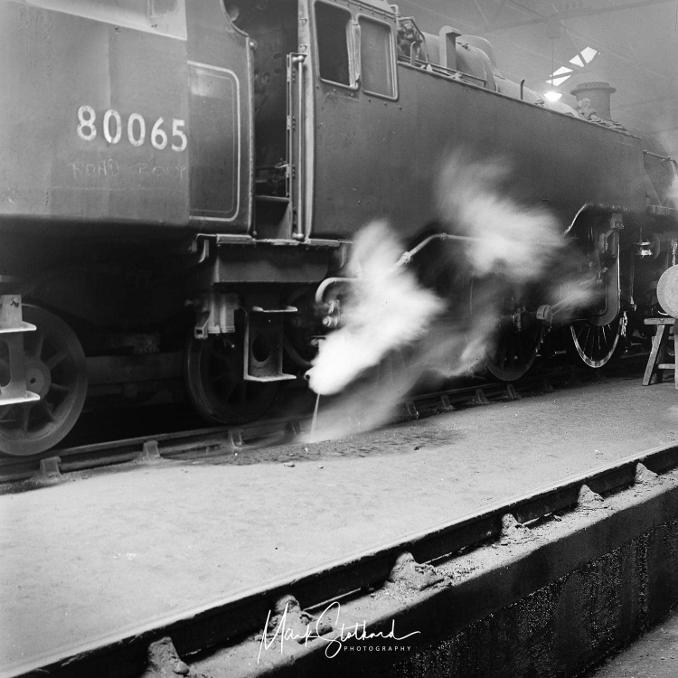
accreditation © Mark Stothard https://msp.im
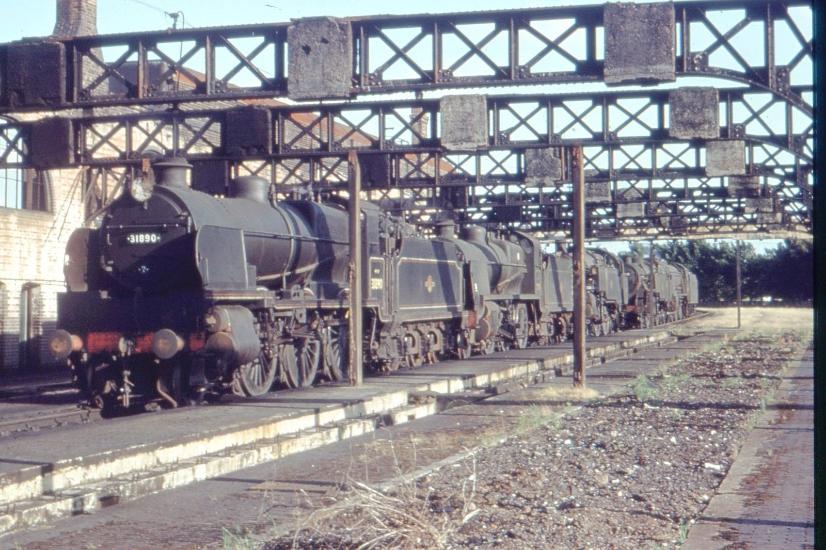
Brighton built BR Standard Class 4MT 80065 on shed at Brighton loco