
LOCOMOTIVE JOURNAL
JANUARY 1965
VIEW POINT
VERDICT AWAITED
By the time this issue appears we shall no doubt have learned the results of our application for a substantial increase in the rates of pay of the Society's member grades, down for hearing by the Railway Staff National Tribunal.
Meantime we can assure our readers that every endeavour has been put forth o their behalf to ensure effective presentation of our case as the Locoman's Craft Society, we await the outcome with interest.
RAIL ACCIDENTS 1963
Since our last issue appeared publication has been given to the annual report to the Minister Transport by Col. D. McMullen, Chief Inspecting Officer of Railways, dealing with railway accidents in 1963. (The report is published by Her Majesty's Stationery Office)
Col. McMullen records that there was once again a welcome reduction in the total number of casualties. There were 39 passenger fatalities and 153 other fatalities on the railways. Only one passenger was killed in a train accident, representing a fatality of 1 in 1,466 million passenger journeys. The continues reduction in the movement accident rate per 1,000 employees particularly men working on the permanent way, is attributed to the campaign started, with Union co-operation, some years ago and now given additional impetus by the Railway Board.
On the railways of the B.R.B. and London Transport there were during the year a total of 11,846 accidents to staff, this number being made up as follows: Killed, 116 (18 footplate staff); seriously injured, 1,183 (201 footplate staff); slightly injured 10,547 (366 footplate staff).
The Report notes that for the first time in four years, there has been a reduction in the number of train accidents, 1,300 against 1,348 in 1962. Significant train accidents, i.e. those of a potentially dangerous type, also fell in number, but the Chief Inspecting Officer records with regret that the rate of these accidents per million train miles (which he regarded as "the most important of all the statistics") has not shown any improvement.
The train accidents are analysed as follows: due to failure of the human element, 585; due to technical defects, 247; due to other causes (snow, landslides, floods, animals on the line, responsibility. of the public, etc.), 468.
There was a considerable increase in casualties to trespassers, mainly children through contact with overhead wires and the live rail, 7 killed and 23 injured compared with 5 killed and 9 injured in 1962. Col. McMullen points out that the main solution to this problems lies in stronger parental control.
Col. McMullen expresses the hope that certain suggestions for improvement of cab layout, which it is considered will reduce strain on drivers, will be accepted by the Board. He also hopes that the Board will equip diesel and electric locomotives with a new Driver's Safety Device ("Dead Man's Pedal") now under test.
The report concluded with a call for "appropriately severe punishment" for the increasing acts of vandalism, such as the placing of obstructions on the railway line. "The miscreants are generally old enough to know the dangers to which their wickedness exposes passengers and train crews," he says, adding that "the public as a whole, the education authorities and parents could help to check his behaviour."
LOCOMOTIVE JOURNAL
JANUARY 1965
PAGE 15
EXTRACTED FROM DISTRICT ORGANISER
BRO. D.K. PULLEN’S REPORT
Probably the high spot of activity in recent week was the visit of the General Secretary to the South Eastern Division of the Southern Region to meet the L.D.C. representatives on the vexed question of bonus payments. Later, in the LIONS’ DEN at NEW CROSS, Bro. Griffiths dealt with a few of the pressing problems of the Division at a mass meeting of the lads concerned. In a situation of deep depression, this was just the tonic needed - and a lively meeting agreed that the G.S. had done a good job. The subsequent discussion on rates of pay and bonus schemes were closely followed by those present at the meeting.
Brighton (2) Branch can always be relied upon to stage a lively meeting if the Organiser or
E.C. Member happens to look in.
No bones broken at the November meeting, though this was not the fault of certain members
present. George Webb was well to the fore, as usual, ably assisted by his younger disciples at the back. I always enjoy a meeting at Brighton, though I can’t think why for the moment.
Selhurst and Bognor Regis Branches are currently grappling with housing problems on behalf of members and we are doing our best to ease the burden of transferred members. This is a very difficult one to solve.
At Selhurst, we were recently shattered by the news that Len Taverner had been removed from track duties by the M.O. This meant an unexpected shake up of the L.D.C. because Len has been transferred to Selhurst depot and thus loses his seat at West Croydon after many years in office. Bro. Taverner has the best wishes of all his colleagues for a full and speedy recover.
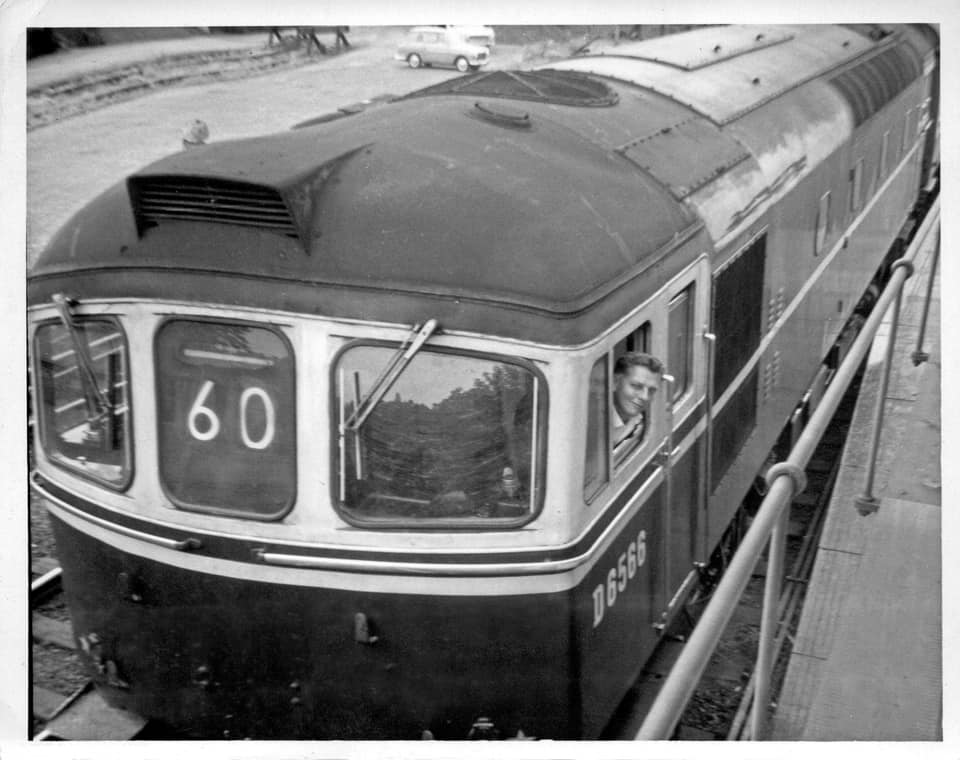
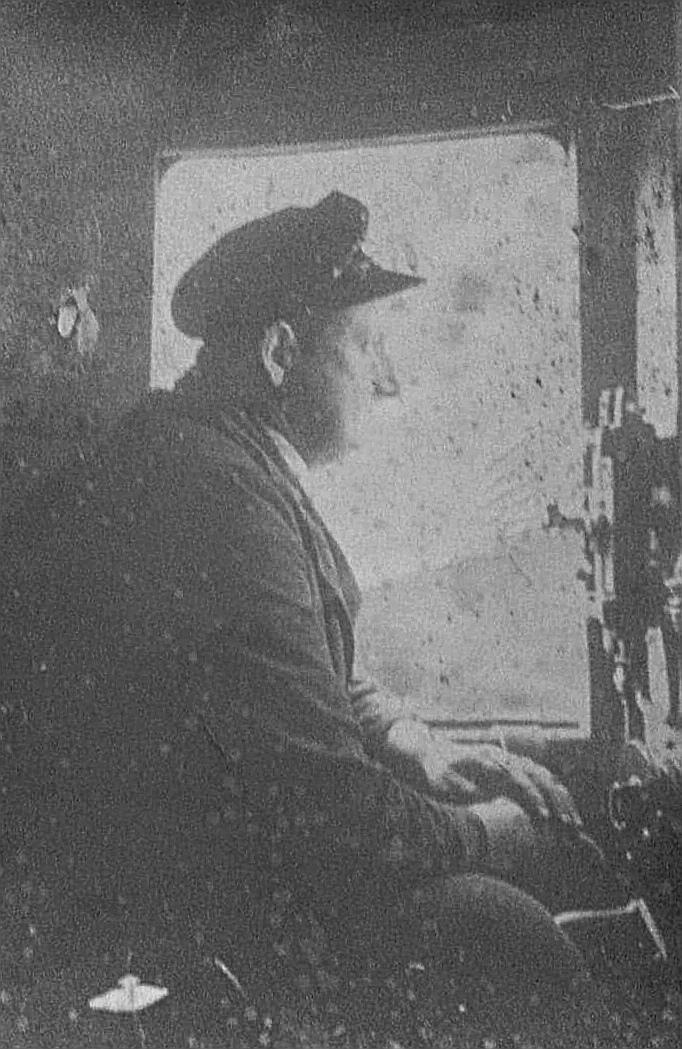
PHOTOGRAPHER UNKNOWN
BIGHTON M.T. DRIVER ROY SWEETMAN
LOCOMOTIVE JOURNAL
JANUARY 1965
PAGE 12
NORWOOD BRANCH
The first year since I was elected Branch Secretary has now gone by, and thanks to assistance from other officials my job has been made easier for me.
Branch meetings for this past year have been more in number but there are still not enough members attending other than the same faces each time; we are hoping to see more in the New Year as our depot is being moved to a new site in Norwood Yard, and that this is sure to cause some unrest and new problems to our members.
We have two members on the L.D.C. this coming year, and we hope that the men at the depot will co-operate with them in their duties; they are Bros. H. Plumb and G. Andrews.
J. HEWING
BRANCH SECRETARY
LOCOMOTIVE JOURNAL
FEBRUARY 1965
VIEW POINT
PAYMENT DURING SICKNESS
Just as this closes for press, news comes of the improved Sick Pay Scheme to be introduced with effect from 5th April next on British Railways, superseding the current British Transport Commission Sick Pay Scheme for Wages Grade Staff. The new arrangements are on the lines of those introduced for London Transport staff as from 1st January this year. The basic features are the supplementation of National Insurance Sickness Benefit to three quarters of the weekly rate of pay (with a minimum payment of 40s. per week) and the extension of the payment periods.
Any scheme which does not provide for full supplementation can of course be criticised as falling short of the ideal. Nevertheless readers will agree that the new arrangements represent a tremendous and indeed historic improvement in a very important aspect of the conditions of service of railway wages staff.
Details of the scheme are as follows:
Staff Covered by Scheme
The scheme will apply to British Railways wages staff. Staff will qualify for sick pay in respect of a particular absence only if they have completed one year's continuous service in the case of a man or five years' continuous service in the case of a woman at the date of commencement of the absence.
Absences Qualifying for Sick Pay
All absences on account of sickness or accident (certified by a registered medical practitioner) which exceed a waiting period of seven consecutive calendar days will qualify for payment in respect of the period in excess of seven days, subject to the clauses relating to "Period of Payment of Sick Pay" and "Linking up of absences" respectively.
Amount of Sick Pay
The weekly amount payable under the Scheme will be such as to supplement an employee's weekly entitlement to National Insurance sickness benefit (including allowance for dependents) up to three quarters of the weekly rate of pay as hereinafter defined. The minimum amount of sick pay payable under the Scheme will be at the rate of 40s. per week.
National Insurance Entitlement
For the purpose of the Scheme
(a) Married women who do not contribute to National Insurance will be deemed to be contributors:
(b) Widows will be treated as single persons;
(c) When Industrial Injuries Benefit is receivable, the employee will be deemed to be receiving National Insurance sickness benefit;
(d) Any loss of National Insurance sickness benefit arising from an employee's failure to claim full entitlement will not be made good by British Railways; if for any reason National Insurance sickness benefit at the level assumed is not received, British Railways reserves the right to determine the amount of National Insurance benefits to b taken into account in assessing sick pay under this Scheme.
Period of Payment of Sick Pay
For men who have completed one years' continuous service, and women who completed five years' continuous service, the period of entitlement to sick pay will be as follows:
(a) For staff who have less than ten years' continuous service, up to seven weeks in a calendar year;
(b) For staff who have at least ten years' but less than 15 years' continuous service, up to ten weeks in a calendar year;
(c) For staff who have at least 15 years' but less than 20 years' continuous service, up to 13 weeks in a calendar year.
(d) For staff who have at least 20 years' continuous service, up to 18 weeks in a calendar year.
Linking up of Absences
Any absence occurring within ten days of the end of an absence of more than seven days' duration will be linked up to that absence and the waiting period waived.
Calculation of Sick Pay
(a) The sick pay year will be 1st January to 31st December and the maximum entitlement within any calendar year will be 7,10,13 or 18 weeks, according to eligibility, provided that continuous periods of absence, including linked up absences which extend from one calendar year to another, will be treated as though the whole had occurred in the year in which the absence commenced.
(b) Sick pay will begin to accrue on the weekday following the seventh calendar day of any absence and will be paid on a daily basis of one sixth of the weekly rate of sick pay for succeeding weekdays, Monday to Saturday inclusive, of absence within the entitlement period.
Rate of Pay to be Used for Sick Pay Purposes
The rate of pay to be used for sick pay purposes will be the rate normally payable in respect of annual leave.
Medical Certificates and Sick Pay Status Certificates
Medical certificates from a registered medical practitioner must be produced in accordance with agreed arrangements covering the beginning and the end of each absence. Intermediate certificates must be provided when appropriate. Before any sick pay is authorised, a sick pay status certificate must be completed. A further sick pay status certificate must be completed if there is any change in the employee's entitlement to National Insurance benefit during a period of sick leave. In cases of doubt as to the amount of National Insurance benefit receivable in a particular case, British Railways reserve the right to ask for National Insurance form BBS12.
Offsetting Arrangements
Where there are existing arrangements under any scheme which provides sickness or accident benefits wholly or partly at the cost of British Railways, the value of the benefits provided by British Railways in any particular week under such arrangements will be deducted from the sick pay due in respect of that week under this scheme.
Transitional Arrangements
(a) No sick pay will be paid under this scheme in respect of any absence which commenced before 1st December, 1964, or which would be linked up with such an absence under these arrangements.
(b) The period of entitlement to sick pay of any member of the staff under this Scheme for the period to 31st December, 1965, will be reduced by any period between 1st January and 3rd April, 1965, in respect of which payment has been made under the B.T.C. Sick Pay Scheme for Wages Grades Staff in relation to entitlement for the sick benefit year ending 30th November, 1965.
(c) In the case of staff who are absent from duty on 5th April, 1965, because of sickness or accident, any period between the commencement of the absence and that date will be taken into account in calculating the waiting period of seven consecutive calendar days and the absence will be linked ups with an earlier absence in cases where the appropriate clause of these arrangements would apply.
Maternity Leave
Pre-natal, confinement and post-natal leave will not rank for sick pay under the scheme
Staff Provided with Free Board and Lodging
Adjustments in the amount of sick pay payable under the Scheme to staff who are provided with free board and lodging will be made by British Railways in consultation with the appropriate representatives of the staff.
Accidents
In respect of absence due to an accident occurring either on or off duty, sick under this Scheme will be paid as a loan which will be repayable to British Railways in the event of the member of the staff involved in such accident recovering damages from a third party or British Railways.
Review of Scheme
The basis of payments made under this Scheme will be subject to review in the light of any change in circumstances at the request of Management or Trade Unions.
Part-time Staff
Payment of sick pay to part-time staff will be on the same basis as set out in Clause 4 of this scheme, but the minimum rate of sick pay for such staff will be reduced proportionately according to their normal working week.
Staff with Broken Service
If service is broken due to redundancy and the break does not exceed three years, service will be treated as continuous for the purpose of this scheme.
Entitlement to be Settled at Commencement of Absence
Entitlement as regards duration of sick pay applicable at the commencement of an absence shall continue throughout that absence and an employee who during a period of absence exhausts his sick pay entitlement under this scheme cannot re-qualify for further sick pay during that absence.
LOCOMOTIVE JOURNAL
FEBRUARY 1965
PAGE 39
SELHURST BRANCH
December saw the Branch A.G.M. Arranged for a Sunday to include both shifts, it proved a very lively meeting. It was refreshing indeed, and a promise of things to come, to see younger members volunteering for positions as officers of the Branch.
A good report was read from Organising SecretaryDon Pullen re Housing of Railway Tenants; it fell a bit flat with the summing-up that “not much can be done without Government intervention.”
Still confusion and wrong interpretations as regards use of taxis and application of Factory Act to local problems. Members urged that they need legal advice from Head Office. L.D.C.’s complained that when meeting Management they become “amateurs” against “professionals” when discussing legal points.
Election of officers saw a few changes, and, owing to the new area organisation, two new L.D.C. representatives, including Secretary and Chairman.
Selhurst have a big job on their hands for 1965 but are ready for it. The efforts of a few are bringing rewards; the attendances are up.
E. PENTECOST
BRANCH REPORTER
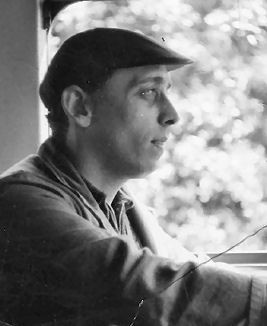
DAVID GILLIAM COLLECTION
Driver Dennis Gillam Brighton M.T.
LOCOMOTIVE JOURNAL
FEBRUARY 1965
PAGE 40
BATTERSEA BRANCH
Last January the “General” came along and opened the first meeting of the combined Battersea and Clapham Junction Branch. Reviewing the actives of members of the members and officers over the past year I think the venture has been a great success; this from most members’ point of view.
Chairman Bro. D. Carew had to resign office due to personal reasons; whilst his absence will be greatly felt at Branch Meetings, we are assured that our new Chairman, Bro. R. Lifford, will be able to encompass the duties without difficulty.
The Nons and Lapsed Members are still a headache, but it has been pleasing note that in the last few weeks the Officers are really getting results in this field. I must as Branch Secretary pay my sincere thanks to them for their endeavours.
We have had some very good Retirement Presentations, at which Bros. M. Renshaw and A. Stanton have officiated. We have not yet had the pleasure of the company of the General or Assistant, but we hope this will be possible in the mot-too-distant futures.
The men who retire from the service of the B.R.B. and Society are deserving of every consideration that our social Section can give them.
R. Weeks
LOCOMOTIVE JOURNAL
MARCH 1965
PAGE 77
DON PULLEN
DISTRICT ORGANISER No. 7 REPORT
Norwood Junction M.P.D. has recently taken up its premises and walked, so to say. The depot has moved, lock, stock and barrel, to newer pastures and of, course, there are the attendant difficulties and hardships for the staff concerned. Once again we have the sorry spectacle of a wholesale removal before the new depot is half completed. Maybe the Southern Region has treated its staff a little better than, for instance the London Midland in this matter - but this transfer could have been handled in better style if a little more thought had gone into the preliminaries.
LOCOMOTIVE JOURNAL
APRIL 1964
VIEW POINT
TRUNK ROUTE PLAN
On February 16th the British Railways Board released to the public a further of British Railways. The subject, and title, of this new document is "The Development of the Major Railway Trunk Routes," and we are told that its publication is not "a prelude to predicate action on a broad front," but an "exposure of ideas about the way in which the trunk route system should be shaped." This object is also defined in other words as being a critical examination of British Railways trunk routes, setting out for consideration the information and forecasts necessary to establish how the through route system can best be developed to match the future pattern of rail traffic demand, "To this end, the report looks ahead 20 years. It is confined to the trunk routes and leaves out those parts of the system which can be dealt with as separate or subsidiary issues, namely, the commuter services and feeder lines."
The conclusion reached by this latest study is that approximately 3,000 out of the 7,500 miles of trunk rail route throughout Britain should be selected for future development. It is stated that non selection of lines for intensive development does not necessarily mean their abandonment in the foreseeable future, nor that money will not be spent on some to improve their suitability for their continuing purpose. Reference is made to the present extent of duplication of trunk routes due to the railways having been built by competing interests often operating over the same territory.
British Rail costs, the report says, are much inflated by a resulting excess of trunk route capacity. In these circumstances the view of the B.R.B. is that traffic and capital development should be heavily concentrated on chosen routes.
With this in mind the various present day trunk lines are examined, and certainly of them are selected as being most suitable for development, as follows:
London to Scotland (three routes examined),
The West Coast route through Birmingham, Preston and Carlisle,
London to Manchester/Liverpool (three routes examined),
The West Coast route through Rugby and Crewe,
London to Birmingham (two routes examined),
The route via Rugby,
London to the North East (four routes examined),
East Coast via Doncaster and York,
Leeds to Leicester (two routes examined),
The Midland route
Through Sheffield, Nottingham and Leicester;
London to South Wales and the South West (three routes examined),
The route Reading and Swindon, to South Wales and Bristol,
North East to South West (three routes examined),
The route Leeds, Sheffield, Derby, Burton, Birmingham, Gloucester, South West, and West Country,
Trans Pennine (five routes examined)
(a) Leeds, Hebden Bridge, Manchester
(b) Sheffield, Woodhead, Manchester.
Additionally, the report states that development in Hampshire (oil refining, Southampton expansion) dictates the necessity to choose a route on the Midlands; the line selected is that via Basingstoke, Reading and Didcot to Birmingham.
Inside Scotland the route to be developed between Edinburg and Glasgow (chosen from three existing) should be the one via Falkirk and Polmont.
It is anticipated by the report that over the next 20 years fright traffic will be doubles (with large increases in oil, and iron and steel), and that there will be a slight fall in passenger traffic.
T.U.C. View
The T.U.C., taking up the Board's open invitation, has formulated its own criticisms of the new document, and has issued a statement in the course of which it says: "In the T.U.C.'s view a more profitable method of approach would have been for the report to discuss objectively the various alternative courses of action. The report does not, for instance, discuss the possibility of specialisation whereby express trains might be concentrated on a Class 1 route and other trains on a cheaper routes."
"To the T.U.C. the most unsatisfactory part of the report is the section which consider the selection of particular routes for development. Although this issue involves the investment of considerable sums of money there is no overt reference to the economics of the routes concerned. In particular, no estimates are given of the savings in cost which are assumed or how such savings might be achieved. Each routes requires a thorough economic appraisal, examine the costs and benefits of alternative courses of action. Civil engineering information alone provides a quite insufficient basis for any constructive criticism to be made of these proposals, which are therefore in their present from certainly not the basis for positive planning."
Social and Economic Needs
"In concluding its published statement the T.U.C, expresses its belief that "the only way to examine the proposals adequately is on the basis of much fuller information about their implications and tin the context of the Transport Minister's review of transport policy as a whole."
WE could not agree more. Once again let it be said: Whatever is to be the ultimate shape of British Railways, this must be decided against the background of social and economic needs as a whole, now and in the. years to come, not on the narrow basis of so called "profitability". which underlies the new report no less than it did the Beeching Plan itself.
LOCOMOTIVE JOURNAL
APRIL 1965
LONDON BRIDGE BRANCH
Congratulations to the General Secretary on the termination of the pay rise negotiations. In company with other members of my branch I was fortunate enough to hear the G.S. put our case at Holborn Town Hall. I’ll give him 10, and vote him “a hit.” The congratulations were tempered by expressions of dissatisfaction at the length of time negotiations take, and the fact that the Tribunal chose to ignore the General Secretary’s request that the award be made retrospective.
A vote of thanks to H.O. for obtaining a day off with pay for men not require to work on 28 December, 1964.
A vote of thanks also to E.C. member Bro. Bill Williams for coming along to the Branch on 7 January and listening to the members’ points of view.
One of our most vociferous members, Branch Collector and L.D.C. man, Bro. D. Upton, resigned “British Rail” employment. Congratulations to E. Barnes on being the successful Branch nominee for L.D.C.
This Branch feels that the rush by the management to dispense with tail lamps in favour of the roller blinds requires more thought. The L.D.C. were instructed to put our point of view to Management.
Applications for membership continue, mainly from lapsed members. Let us hope that payrolls deductions will eliminate this anomaly, and also the NONS in our midst.
A.J. Boyd
Branch Reporter
DEBORAH LAWRANCE COLLECTION
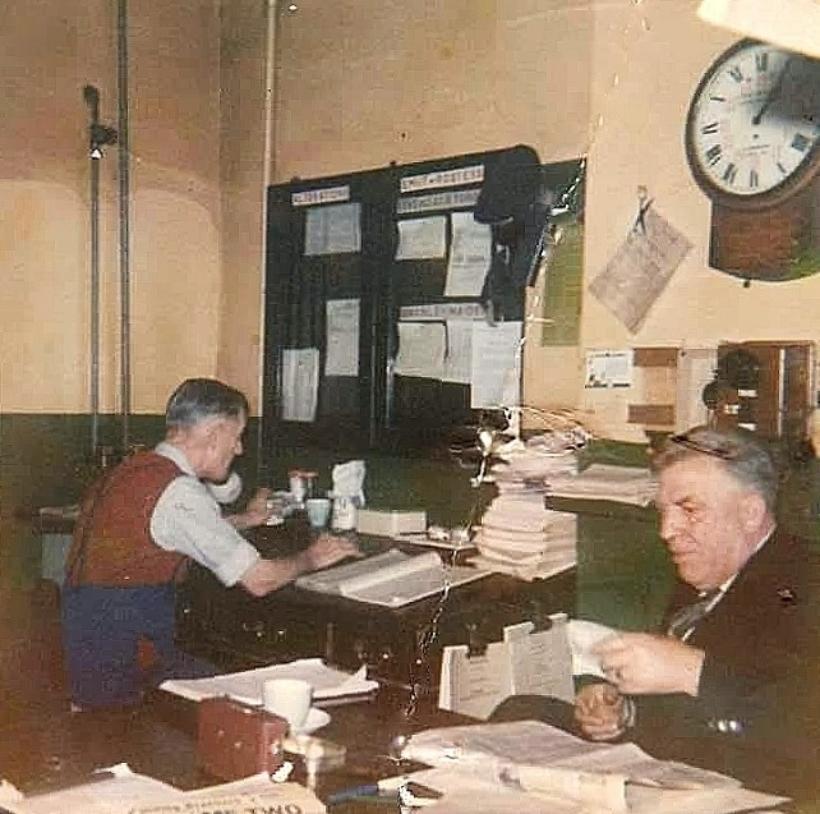
Left - Right Jack Pring (?) & Frederick Elmer
Tunbridge Wells Loco Office was situated in the loco shed
Jack Pring seniority date 07.01.1918
Fred Elmer seniority date 4.12.1919 retired in 1968
Fred started his footplate career at the L.W.S.R. loco depot at Plymouth Friar on the 4th December 1919. With the formation of the Southern Railway, this enable Fred to moved to Newhaven in c1936 and in the same year he moved to Tunbridge Wells West.
These moves are not know whether they are promotional, redundancy or relocation moves
Fred ended retired as Loco Foreman at Tunbridge Wells West in 1968
Extracted and adapted from
Tunbridge Wells Branch Meeting
Sunday May 30th 1965 at 10.45 p.m.
at the Welfare Rooms, Central Station.
The Branch Chairman opened the meeting by welcoming Bro. Dray of Sectional Council No. 2 who was present to keep us in the regarding picture the redundancies at Tunbridge Wells West.
General Committee meeting report was then given, but we were reminded of the position of June 14th when there would only be 34 men available and it was agreed to discuss this at a future meeting.
L.D.C. Report was given by Bro. Brooker who covered full the L.D.C. Efforts to to illuminate some of the hardships caused by the redundancy and the Branch's thanks are recorded to the L.D.C for the way in which they rose to the occasion and made every effort to fight the management on the position of redundancy at Tunbridge Wells West.
Bro. Dray then gave his report and expressed his regret over the decision of redundancy at our Branch by this outlined some of the problems facing the Union and Sectional Council, he related that by 1967 there would be no Depot at Nine Elms and there would be a possible 150 men redundant; Guildford was affected and it was proposed to freeze the vacancies at these depots to allow a gradual run down.
Question were then asked by Bros. Stephenson, Blackmore & Savage. Bros, Stephenson and Blackmore regardng their respective moves to Orpington and Tonbridge, and Bro. Savage asked Bro Dray if it were not possible for the redundant men to be carried at Tonbridge until vacancies occurred. Bro. Dray said he would raise this question with Management.
There being no more questions or business to discuss Bro. Brooker thanked Bro. Dray for his presence who replied that he would be pleased to attend any of our meetings in the future.
It was proposed Bro. Blackmore seconded Bro. Bridger that a vote of thanks be given to Bro. Dray, this was carried Unam.
The meeting was closed at 12.20.
Membes present Bros. R. Bridger, E. Dunmall, Baldwin, R. Dunmall, Oakly, Blackmore, Coomber, E. Francis, Saunders, Card, T. Hollands, Robinson, Chalklin, R. Brown, Kibbey, Savage, Russell, Rumley, Gower & Brooker.
In attendance at this meeting was 20 of members out of a membership of 52 members.
MALCOLM WALLS COLLECTION
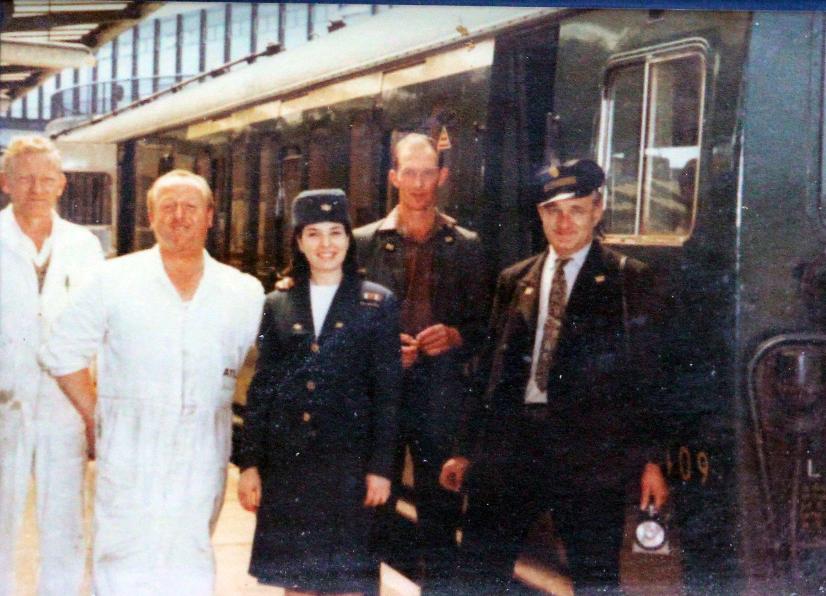
Three Bridges Peter Walls
Peter Walls at Gatwick late 60's with Air France Hostess and colleagues. You can still just make out the old airport approach road top left of picture.
Peter carrying standard issue lamp which he kept in pristine condition and i still have. Plus satchel and cap both of which again i still have. You would never catch my dad without a tie or unpolished shoes at work plus he carry the standard issue brown BR notebook and pencil.
THE END OF STEAM IN MID SUSSEX
The last steam service to operate between Three Bridges to East Grinstead line was on Friday 11th June, departing Three Bidges at 18.07 and arriving at East Grinstead High Level at 18.36
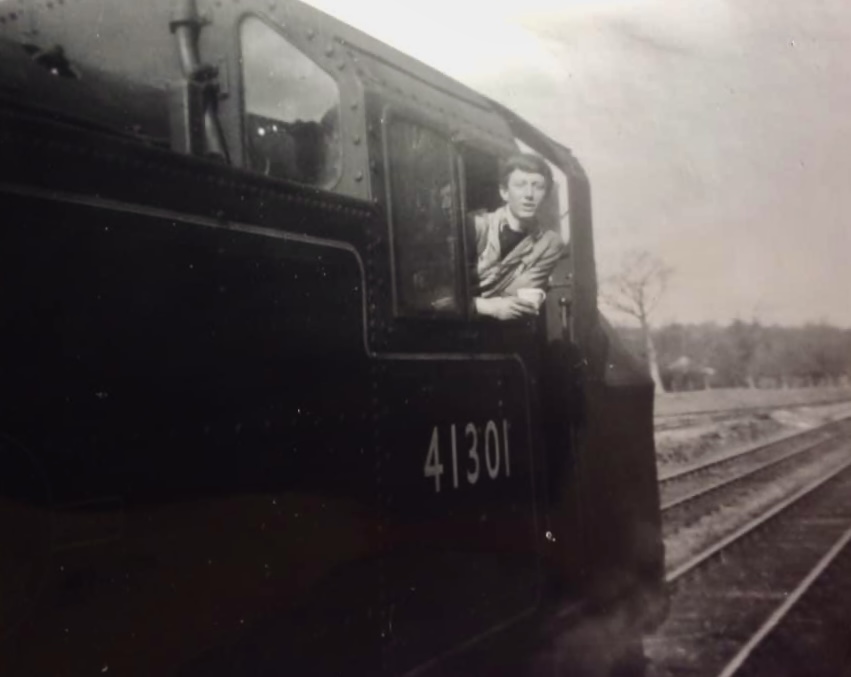
BIFF MANVELL COLLECTION
Three Bridges Fireman Biff Manvell
THE CLOSURE OF TWO RAILWAY LINESBOTH LINES CLOSED ON THE 12th JUNE 1965
THE CLOSURE OF THE CRANLEIGH LINE
CHRIST'S HOSPITAL TO GUILDFORD.
The line between Christ’s Hospital and Guildford via Cranliegh close on the 14 June 1965. . The last day of full service was on Saturday 12 June and the last train left Guildford at 19.34 worked by Three Bridges Driver Ken Chapman and Fireman Biff Manvell working an Ivatt Tank 2-6-2T, no. 41287. It consisted of two three-coach sets carrying some 400 passengers.
A special service of nine coaches carrying around 400 passengers and hauled by ex- Southern Railway Q1 Class 0-6-0 locomotives was organised on Sunday 13 June by the Locomotive Club of Great Britain, with the last train leaving Guildford at 18.55 and returning back at 20.34. The line closed on Monday 14th June, 1965
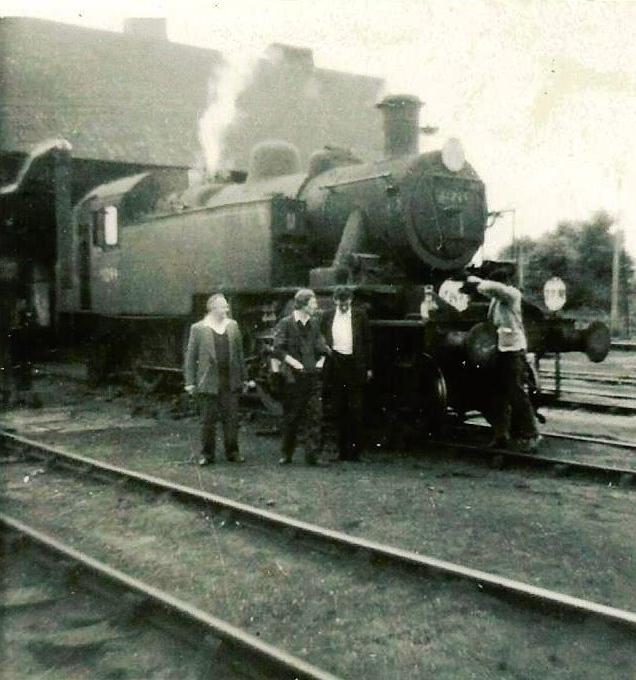
KEN CHAPMAN COLLECTION
Left - Right Three Bridges Foreman John Newcombe,
Three Bridges Fireman Biff Manvell & Driver Ken Chapman
The engine returned to the “Bridges” depot from Horsham after having worked
the last train from Guildford to Horsham, Saturday 12th June 1965
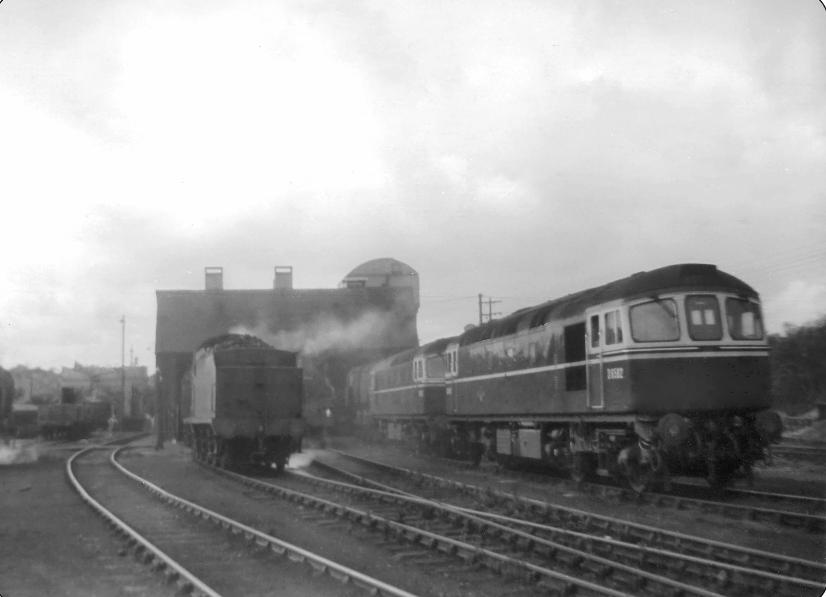
On Saturday 12th June 1965, saw the partial closure of the Cuckoo line between Eridge and
Polegate. The line was closed in various stages in the coming years. The section of line between Polegate to Heathfield was kept open to enable goods trains from Eastbourne to run to Hailsham and Heathfield.
There was also a passenger service was continued between Hailsham and Polegate. The line was finally closed on the 8th September 1968, even though it was hotly contested by the general public.
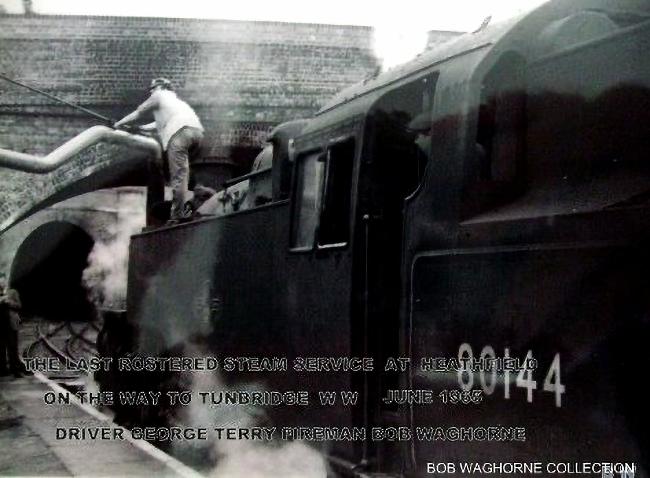
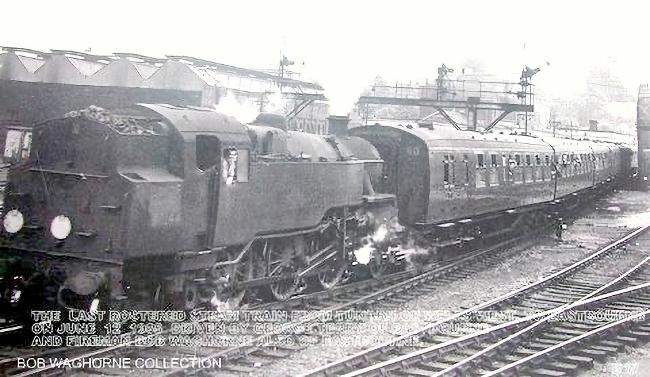
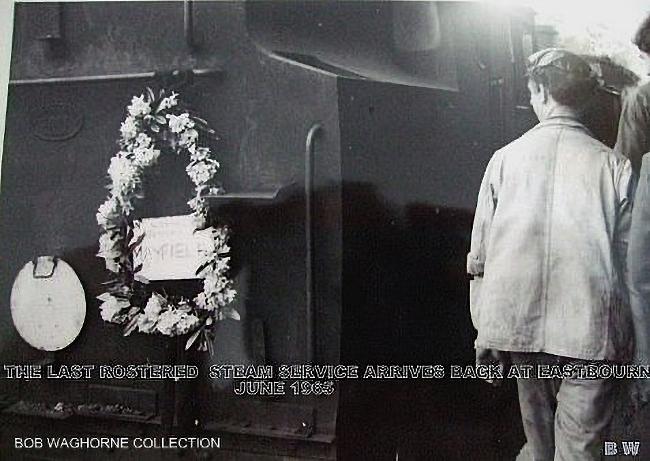
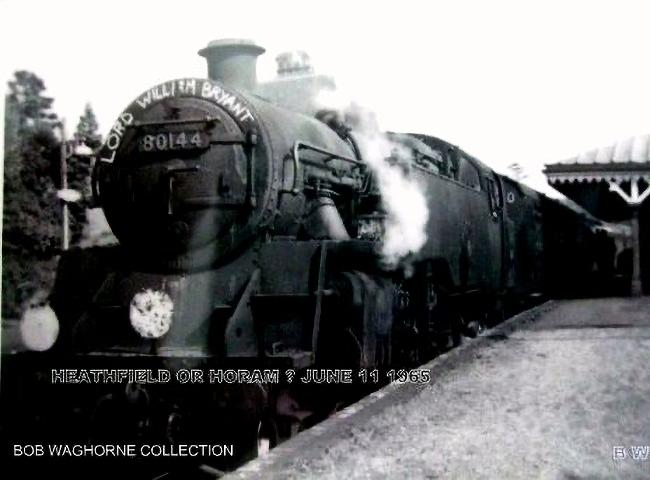
The last rostered steam train departing from Tunbridge Wells West to Eastbourne via "the Cuckoo Line” 12th June 1965. worked by Eastbourne Enginemen
Driver George Terry & Fireman Bob Waghorne
THE WEALDS MAN RAIL TOUR JUNE 1965
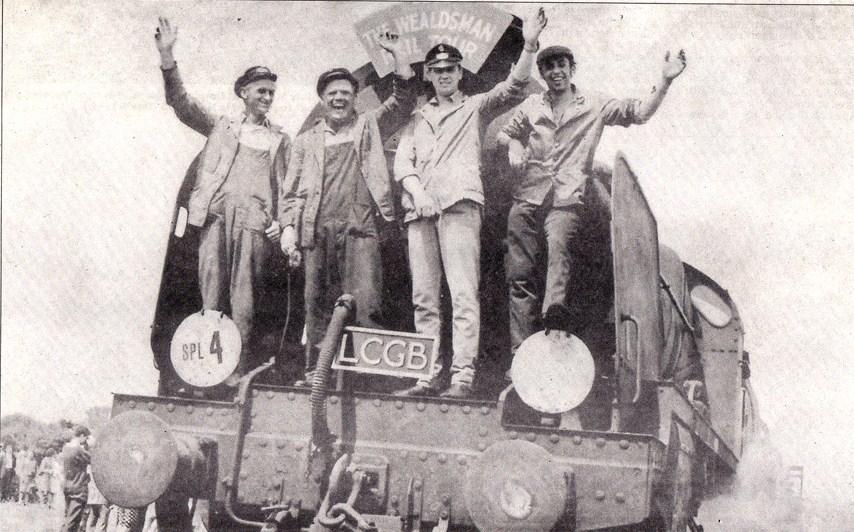
Trevor Morris Collection
The photo above was taken during the Wealds Man Rail Tour Special which was to become the last train to work down the "Cuckoo Line” on Sunday 13th June 1965
Left to Right Eastbourne Driver Spud Murphy & Fireman Stan Laycock
& Redhill Driver Roger Pickthall & Fireman Trevor Morris

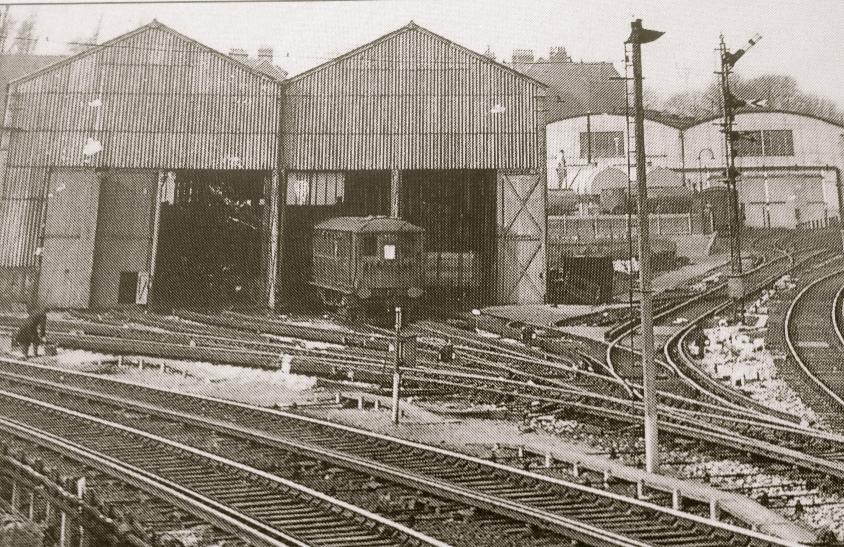
Peckham Rye E.M.U.T. maintenance sheds closed in c1965 with the work on the PUL/PAN/COR/BUF and RES units being transferred to new maintenance sheds at Selhurst
Depot. Berthing of units lasted until April 1967 so it is thought that is when the Motorman’s
Depot would have closed (this is to be confirmed) and the site was demolished in 1969.
PULBOROUGH
18th AUGUST 1965
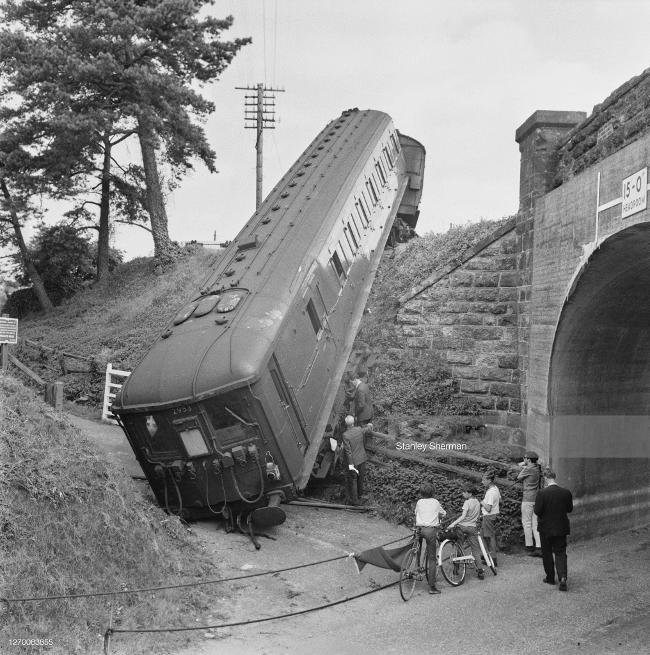
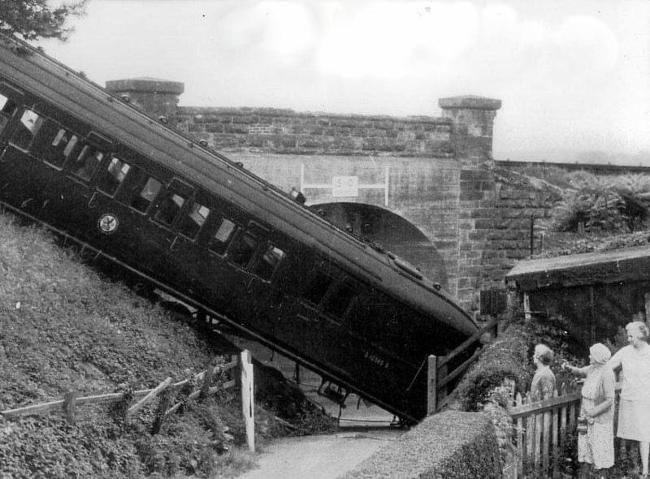
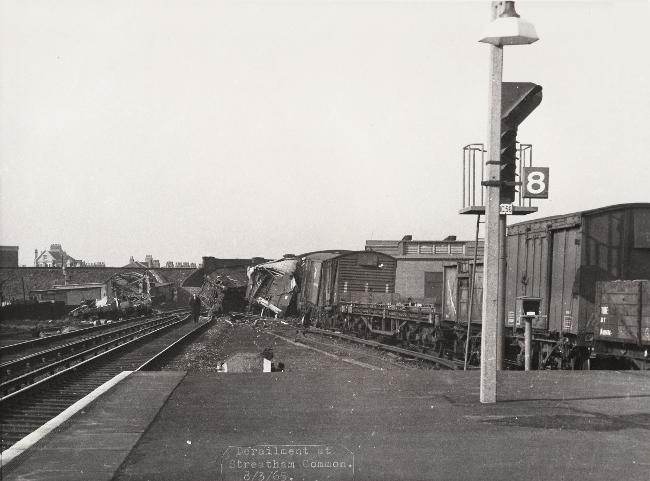
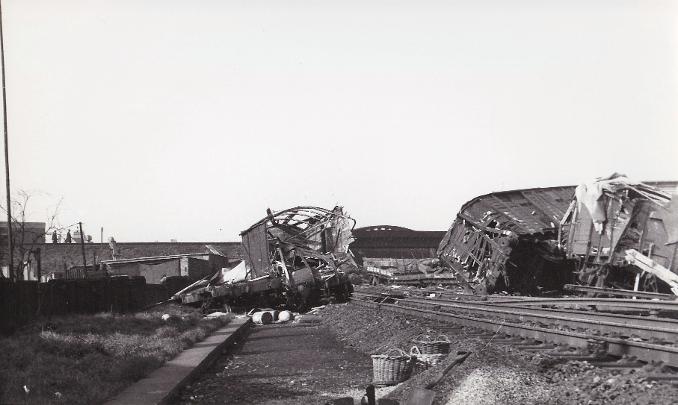
Railway accident on British Railways
Southern Region
Central Division
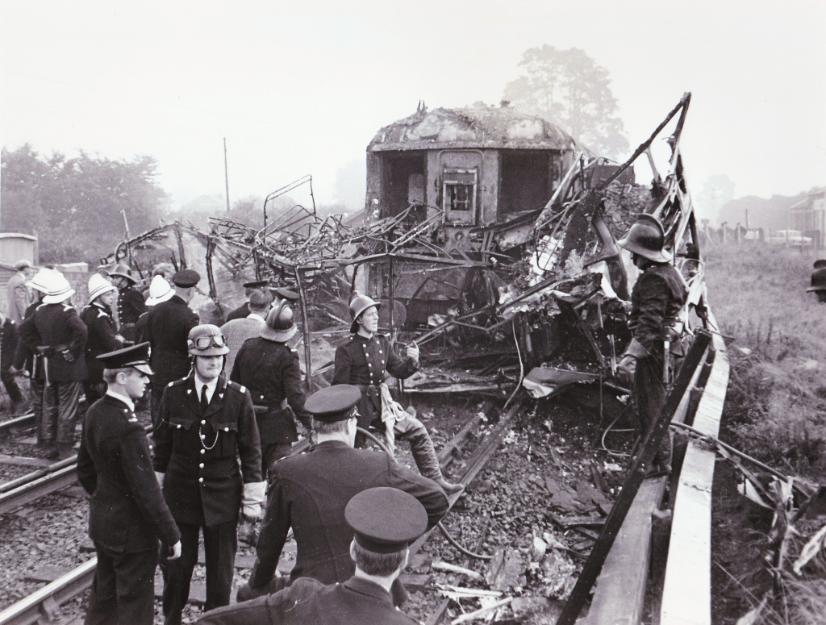
DAVID WARD COLLECTION
Roundstone Level Crossing 22nd September 1965
Involving Brighton Driver L. Parker
SEE SUB PAGE
BEDFORD DRIVER BILL DAVIES
REFLECTS ON THE 1965
MANNING ARRANGEMENTS
LOCOMOTIVE JOURNAL
OCTOBER 2014
Adapted from an article
by Bill Davies
The Manning Arrangements become applicable from Monday 25 October, 1965, this incredible agreement came into place awarding a ‘star’ to all who had started before this date, which not only ensured future employment, but protected their earnings as well. historically, it was one of the finest agreements ever signed by A.S.L.E.F. to protect members in the line of promotion.
In essence, firemen would no longer be required on the new traction, then replacing steam, although it was not until August 1968 that this form of traction was finally phased out, with one notable exception, in the Vale of Rheidol. (On Wednesday 11th August, 1968, the Fifteen Guinea Special was the last British Rail steam train to run between Liverpool, Manchester and Carlisle.)
The agreement that was reached provided arrangements for the displaced fireman to accompany his driver on his rostered turn or, if he was required for other duties, to receive payment for that turn, whichever was the greater. At some depots firemen who were disadvantaged financially by being removed from their turn were then covered in the form of a ghost link which identified what their turn of duty would have been, with the appropriate payment.
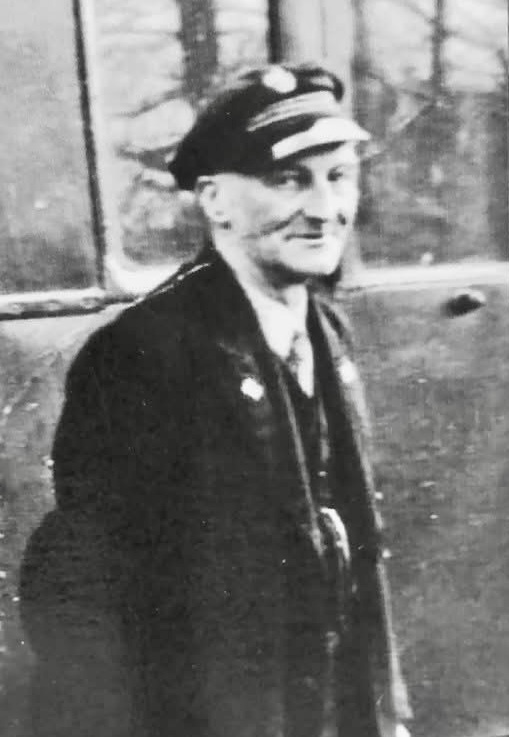
Branch Meeting was held on Sunday 26th December 1965
at the Royal British Legion Seaford
Head Office letter re Bro. A. Rookley.
moved by Bro. D. Renville and seconded Bro. R. Morris.
"That the Secretary write to Head Office requesting Bro. A. Rookley membership over 65, as he has unbroken railway service acting as a Guard at Seaford."
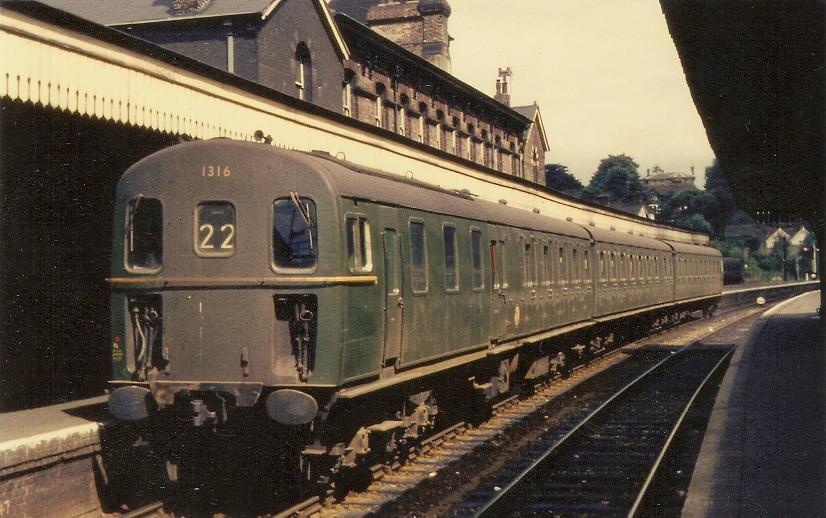
PHOTOGRAPHER UNKNOWN
Tunbridge Wells West